Peacocks for sale
Price range: $250.00 through $650.00
Add elegance and vibrant beauty to your property with majestic Peacocks, prized for their spectacular tail displays and regal presence. These hardy ornamental birds thrive in spacious environments and bring a unique, eye-catching attraction to farms, ranches, and estates.
Peacocks for Sale: Acquiring the World’s Most Magnificent Ornamental Birds
Peacocks for sale represent an opportunity to bring living art into your landscape—birds whose iridescent plumage has captivated humanity for thousands of years. Whether you’re seeking a single showstopper for your estate, a breeding pair to establish a legacy flock, or the magical experience of raising peachicks from eggs, acquiring peafowl is a significant and rewarding commitment. At OrderExoticPoultry.com, we offer NPIP-certified, health-guaranteed peafowl from premier bloodlines—including Indian Blue, White, Pied, Black-Shouldered, and rare Green varieties. We provide live birds, hatching eggs, and expert guidance every step of the way. Read on to discover everything you need to know before purchasing peacocks, from variety selection to care requirements and pricing.
What Are Peacocks?
Peacocks are male peafowl, the most magnificent members of the pheasant family. The term is commonly used to refer to both sexes, though technically “peacock” refers to males, “peahen” to females, and “peachicks” to young. Native to South Asia and introduced worldwide, they’re renowned for the male’s extravagant train of elongated upper-tail coverts decorated with iridescent ocelli (eyespots). They weigh 8–13 pounds, live 15–20 years in captivity, and are prized for ornamental, exhibition, and conservation purposes.
Peafowl Varieties We Offer
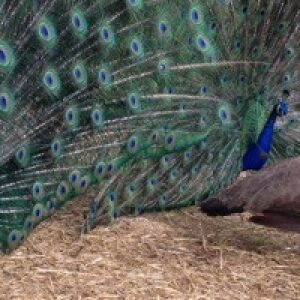
Indian Blue Peafowl (Pavo cristatus)
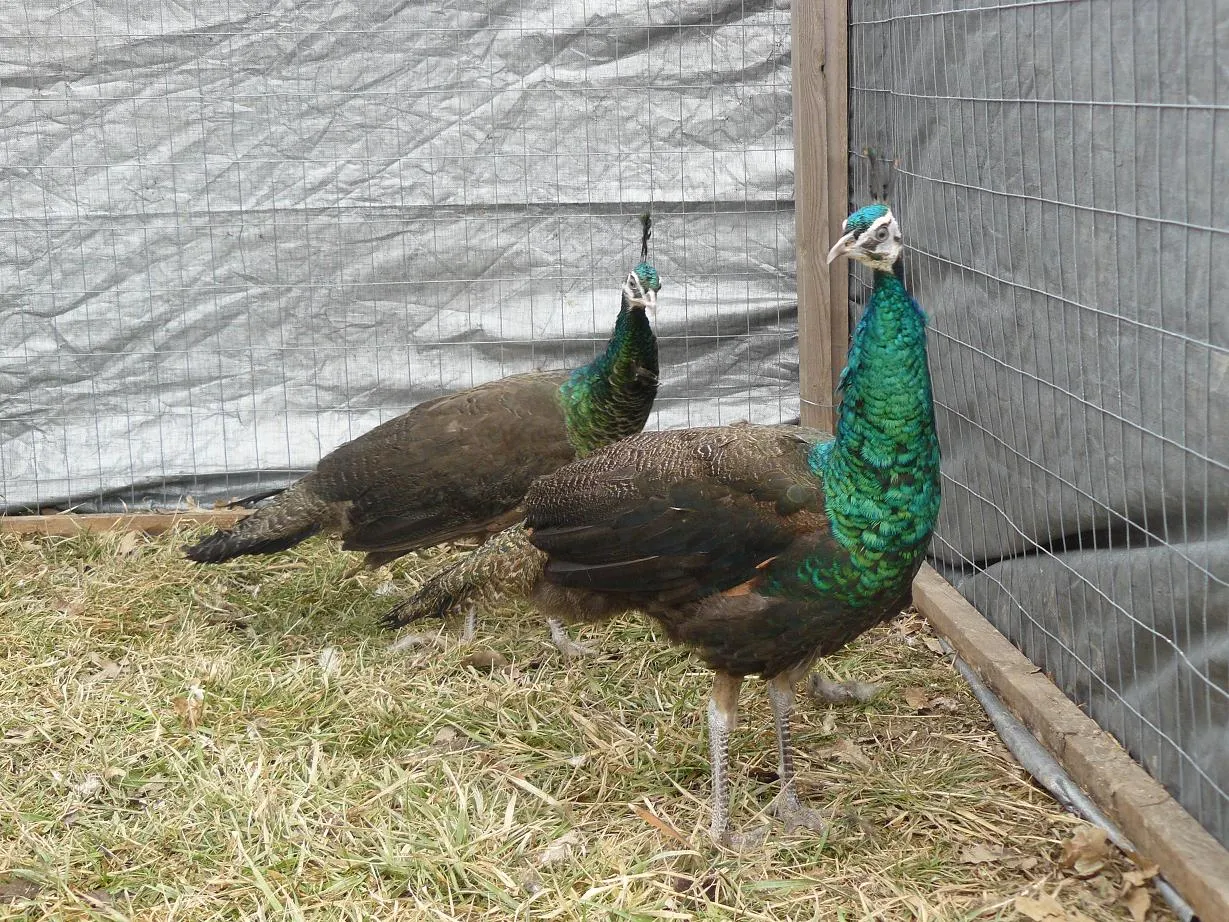
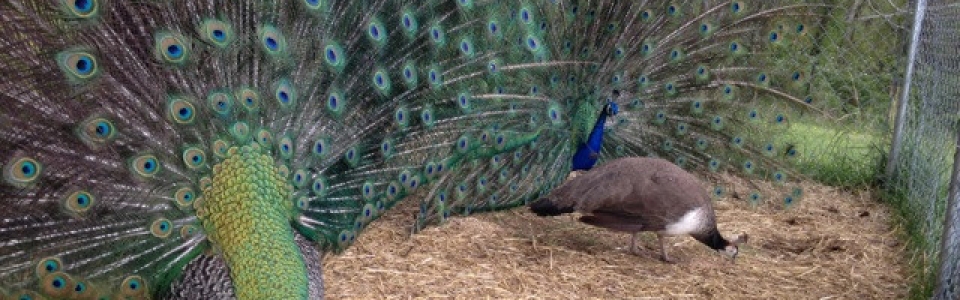
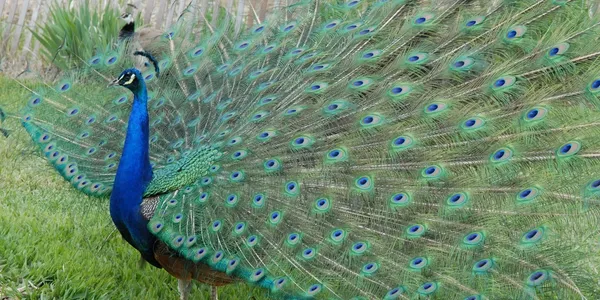
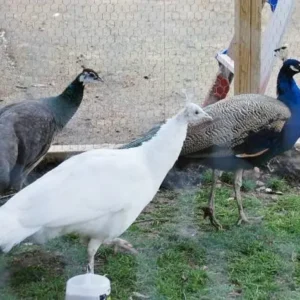
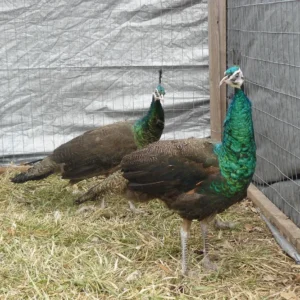
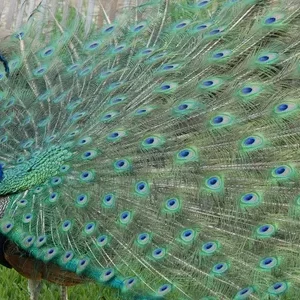
Description: The most common and recognized variety, Indian Blue peafowl are native to the Indian subcontinent. Males display stunning iridescent blue necks and breasts, green-gold trains with blue-and-gold ocelli, and long leg spurs. Females are smaller, with brown and green plumage for camouflage.
Size:
-
Males (Peacocks) : 8–13 pounds, train up to 5 feet
-
Females (Peahens) : 6–8 pounds
-
Peachicks: 3–4 ounces at hatch
Temperament: Generally calm and adaptable but can be territorial during breeding season. They bond with their keepers when hand-raised from chicks. Males can be aggressive toward strangers during mating season.
Purpose: Ornamental display; breeding stock; estate birds; exhibition.
Egg Production: 6–12 eggs per clutch, 1–2 clutches per year (spring/summer). Eggs are light brown, larger than chicken eggs.
Care Requirements: Need substantial space (minimum 80–100 sq ft per bird in aviary), high perches for roosting, predator-proof housing at night, and game bird feed.
Climate Adaptability: Hardy in most U.S. climates with proper shelter. Provide heated shelter in extreme northern winters.
Buyer Suitability: First-time peafowl owners; estates; hobby farms; breeders.
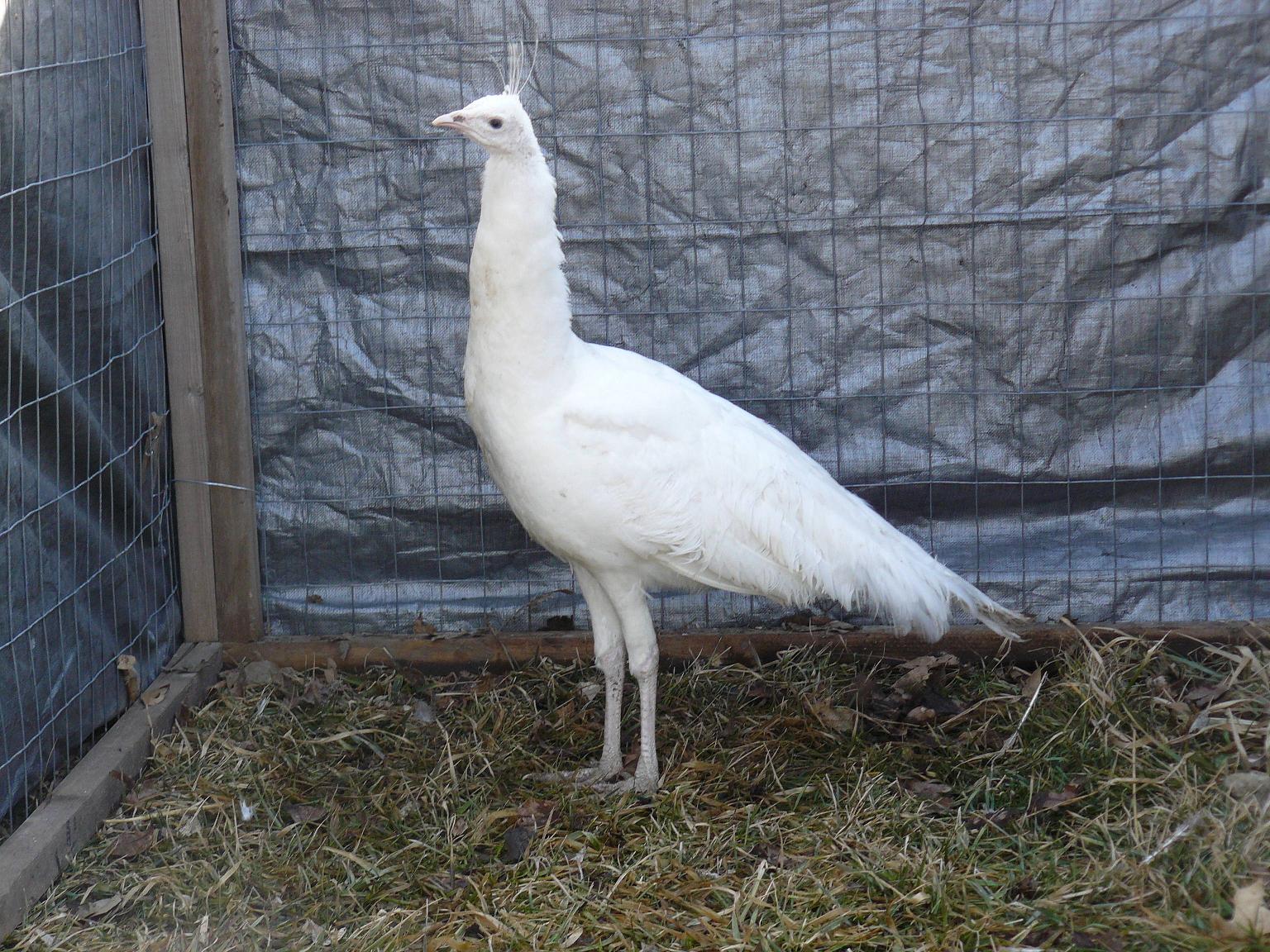
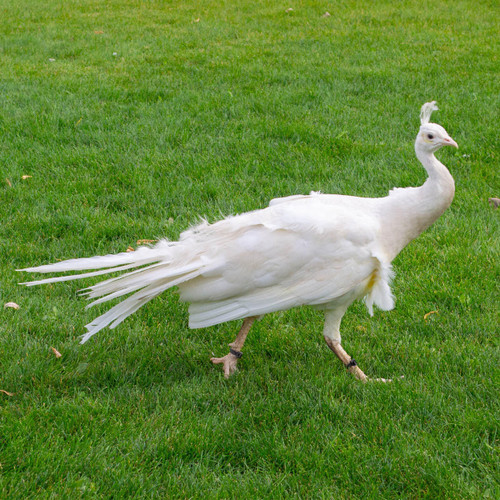
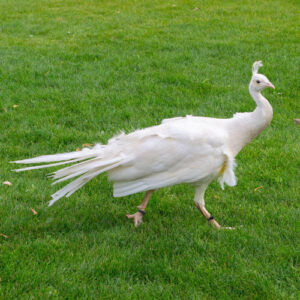
White Peafowl
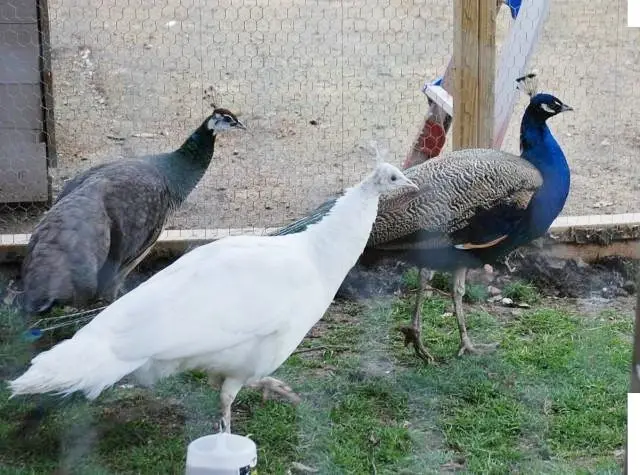
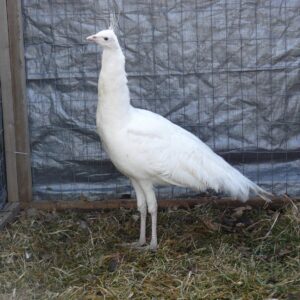
Description: White peafowl are a color mutation of Indian Blue peafowl, not albinos—they have blue eyes and normal pigment in eyes and legs, but pure white plumage throughout. Males display the same magnificent train as blues, but in pure white—a breathtaking sight.
Size: Same as Indian Blue.
Temperament: Same as Indian Blue; often considered slightly calmer by some breeders.
Purpose: Ornamental showstoppers; collectors; wedding venues; photography.
Egg Production: Same as Indian Blue.
Care Requirements: White feathers show dirt easily—need clean environment. Otherwise same as blues.
Climate Adaptability: Same as Indian Blue.
Buyer Suitability: Those wanting the ultimate visual impact; collectors; special event venues.
Pied Peafowl
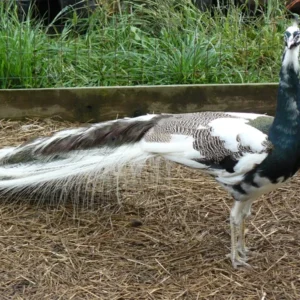
Description: Pied peafowl display patches of white mixed with the standard blue/green coloration—a striking “pinto” pattern. The amount of white can vary from a few feathers to nearly half-white. Each pied bird is unique.
Size: Same as Indian Blue.
Temperament: Same as Indian Blue.
Purpose: Rare color collectors; exhibition; breeding programs.
Egg Production: Same as Indian Blue.
Care Requirements: Same as Indian Blue.
Climate Adaptability: Same as Indian Blue.
Buyer Suitability: Collectors; those wanting something unique; exhibition breeders.
Black-Shouldered Peafowl
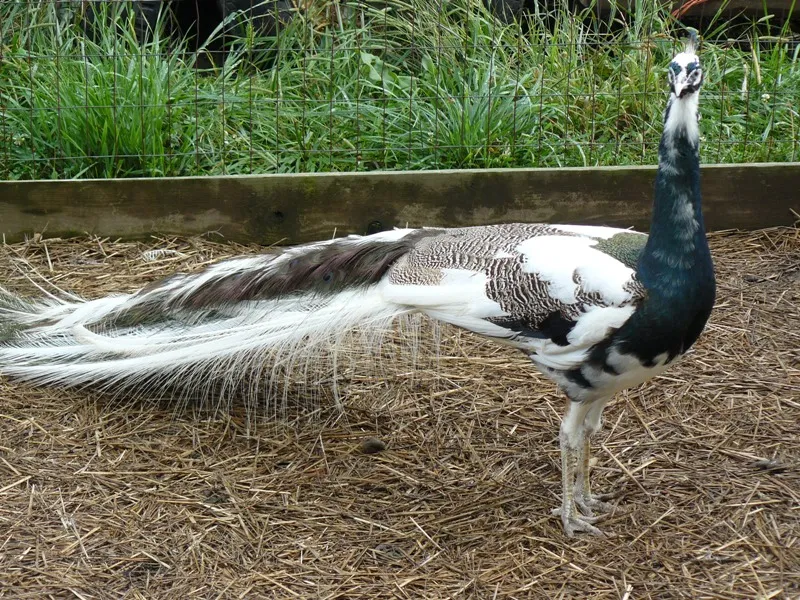
Description: Black-shouldered peafowl (also called Java or Japanned) are a genetic mutation where males have solid black wings and shoulders instead of the barred pattern of Indian Blues. Females are also distinct, with lighter coloration.
Size: Same as Indian Blue.
Temperament: Same as Indian Blue.
Purpose: Color collectors; breeding programs; exhibition.
Egg Production: Same as Indian Blue.
Care Requirements: Same as Indian Blue.
Climate Adaptability: Same as Indian Blue.
Buyer Suitability: Collectors; breeders; those appreciating subtle differences.
Cameo Peafowl
Description: Cameo peafowl display a soft, warm buff or “cameo” coloration instead of the usual blues and greens. This is a rare and beautiful mutation.
Size: Same as Indian Blue.
Temperament: Same as Indian Blue.
Purpose: Rare color collectors; exhibition.
Egg Production: Same as Indian Blue.
Care Requirements: Same as Indian Blue.
Climate Adaptability: Same as Indian Blue.
Buyer Suitability: Serious collectors; those seeking something truly unusual.
Green Peafowl (Pavo muticus)
Description: Green peafowl are a separate species from Indian Blues, native to Southeast Asia. They’re larger, with green and gold plumage, a tall erect crest, and a different train pattern. They’re more aggressive, less domesticated, and require more space and specialized care. They’re also endangered in the wild.
Size:
-
Males: 9–11 pounds
-
Females: 7–9 pounds
Temperament: More aggressive and territorial than Indian Blues; not recommended for beginners.
Purpose: Conservation breeding; advanced collectors; zoological institutions.
Egg Production: 4–8 eggs per clutch, less prolific than Indian Blues.
Care Requirements: Larger space requirements; more predator vigilance; warmer winter shelter.
Climate Adaptability: Less cold-hardy; require heated shelter in all but warmest climates.
Buyer Suitability: Experienced bird keepers; conservation breeders; zoos.
Peachicks (Baby Peafowl)
Description: Peachicks are day-old to juvenile peafowl. They’re delicate, requiring brooder care similar to game bird chicks but for a longer period. They reach full maturity at 2–3 years, with males developing full trains at 3 years.
Advantages: Bond more closely with keepers; lower initial cost; experience of raising.
Disadvantages: Higher mortality risk; need specialized care; sex unknown for months; train development takes years.
Buyer Suitability: Those with brooding experience; patient keepers wanting bonded birds.
Peacock Hatching Eggs
Description: Fertile peacock eggs shipped for incubation. Allow you to hatch your own peafowl without shipping live birds.
Considerations: Hatch rate varies; need incubator and brooder; 28-day incubation period; chicks need immediate care.
Buyer Suitability: Experienced incubator users; those wanting to hatch multiple birds.
Breeding Pairs/Trios
Description: Adult breeding groups—typically 1 male with 2–5 females. Ideal for establishing a breeding program immediately.
Advantages: Immediate breeding potential; established birds; known sex and color.
Disadvantages: Higher cost; may take time to bond with new keeper.
Buyer Suitability: Serious breeders; those wanting immediate egg production.
Peacock Pricing Guide (2026)
| Age/Type | Price Range | Notes |
|---|---|---|
| Peachicks (day-old) | $50–150 | Sex unknown; color dependent |
| Peachicks (sexed female) | $100–250 | Guaranteed female |
| Peachicks (sexed male) | $150–350 | Guaranteed male |
| Juvenile (6–12 months) | $200–500 | Sex usually determinable |
| Adult Peahen (1–2 years) | $300–600 | Ready to breed |
| Adult Peacock (2–3 years) | $500–1,500 | Train developing/developed |
| Breeding Pair | $800–2,500+ | Depending on color and age |
| Breeding Trio (1M:2F) | $1,200–3,500+ | Best genetic diversity |
| White Peafowl | +20–50% premium | Over Indian Blue prices |
| Pied/Black-Shouldered | +30–75% premium | Rare colors |
| Green Peafowl | $1,500–5,000+ | Rare, specialized |
| Hatching Eggs (dozen) | $100–300 | Fertility guaranteed |
Factors Affecting Price:
-
Color: Rare colors command premium prices
-
Age: Adults cost more than chicks
-
Sex: Males cost more than females
-
Bloodline: Show-quality lines cost more
-
Taming: Hand-raised birds cost more
-
Breeding potential: Proven breeders cost more
Peacock vs. Peahen: What Should You Buy?
| Aspect | Peacock (Male) | Peahen (Female) |
|---|---|---|
| Appearance | Stunning train, iridescent colors | Camouflaged brown/green |
| Train | 4–5 feet, displayed for mating | No train |
| Size | 8–13 lbs | 6–8 lbs |
| Vocalization | Very loud calls during breeding | Quieter, but still vocal |
| Aggression | Territorial during breeding | Generally calmer |
| Egg Laying | N/A | Lays eggs |
| Price | Higher | Lower |
| Ideal For | Display, show | Breeding, quieter flocks |
Recommendations:
-
First-time buyers: Start with a pair (1 male + 1–2 females)
-
Display only: Male alone (but prepare for noise)
-
Breeding program: Trio (1 male + 2–3 females)
-
Quiet property: All females (but no train display)
Are Peacocks Good Pets?
The Reality of Peafowl Ownership
Pros:
-
Breathtaking Beauty: Unmatched ornamental value
-
Long Lifespan: 15–20 years of companionship
-
Pest Control: Eat ticks, insects, small snakes
-
Watchdogs: Alarm at predators and intruders
-
Bonding: Can become quite tame with hand-raising
-
Low Maintenance: Hardy, disease-resistant
Cons:
-
NOISE: Peacocks are VERY loud—calls carry up to a mile. Not suitable for suburban neighborhoods.
-
Space Requirements: Need substantial acreage (minimum 1/4 acre per pair, ideally more)
-
Roaming: They roam widely—need secure fencing or tolerance for wandering
-
Damage: Can damage gardens, vehicles (scratching paint on reflections)
-
Aggression: Males can be aggressive during breeding season
-
Legalities: Some areas prohibit or restrict peafowl
-
Neighbor Relations: Noise and roaming can cause disputes
-
Long Commitment: 15–20 years is a serious commitment
Verdict: Peafowl are excellent for rural properties, farms, estates, and acreage—NOT for suburban backyards.
Peafowl Care Guide
Space Requirements
Absolute Minimum:
-
Aviary: 200 sq ft per pair (20×10 ft minimum)
-
Free-range: 1/4 acre per pair ideal, more is better
-
Height: 8–10 ft for roosting perches
Recommended:
-
Breeding pair: 1/2–1 acre
-
Small flock: 1–2 acres
-
Perches: Elevated platforms or large tree branches at least 6–8 ft high
Housing
Night Shelter:
-
Size: Minimum 4×8 ft per pair, larger for flocks
-
Perches: 2×4 inch boards, 4–6 ft high
-
Bedding: Straw, pine shavings, or sand
-
Protection: Predator-proof with hardware cloth (not chicken wire)
-
Ventilation: Good airflow, no drafts
Run/Aviary:
-
Fencing: 6–8 ft high, buried 12 inches to prevent digging
-
Top: Covered or netted to prevent escape and protect from aerial predators
-
Shade: Essential in summer
-
Dust Baths: Provide dry, sandy areas
Feeding
Age-Appropriate Diet:
| Age | Feed Type | Protein % | Notes |
|---|---|---|---|
| 0–8 weeks | Game bird starter | 24–28% | Crumbles |
| 8–20 weeks | Game bird grower | 20–22% | Transition gradually |
| 20+ weeks | Game bird maintenance | 16–18% | Layer feed for hens |
| Breeding season | Breeder feed | 20–22% | Increased protein |
| All ages | Grit | Free-choice | For digestion |
| Layers only | Oyster shell | Free-choice | During laying season |
Supplemental Foods:
-
Greens: Chopped lettuce, kale, spinach
-
Vegetables: Corn, peas, carrots, pumpkin
-
Fruits: Berries, melon, grapes (limited)
-
Protein: Mealworms, crickets (treats)
-
Scratch grains: Limited (10% of diet)
Water:
-
Fresh, clean water daily
-
Heated waterers in freezing weather
-
Large, sturdy containers (they’ll perch on edges)
Health Management
Common Issues:
-
External parasites: Mites, lice—provide dust baths with diatomaceous earth
-
Internal parasites: Worms—regular deworming program
-
Respiratory infections: Ensure good ventilation
-
Bumblefoot: Keep perches clean, avoid injuries
-
Crop issues: Ensure grit available
-
Egg binding: In laying hens—ensure calcium
Preventive Care:
-
Annual health checks
-
Clean housing regularly
-
Quarantine new birds 30–60 days
-
Vaccinate for fowl pox if recommended
-
Regular fecal exams
Signs of Healthy Peafowl:
-
Bright, alert eyes
-
Clean, glossy plumage
-
Active foraging
-
Good appetite
-
Clear nostrils
-
Strong legs and feet
Breeding Management
Breeding Season: Spring through early summer
Pairing: 1 male with 2–5 females ideal
Nesting: Peahens prefer hidden ground nests—provide secluded areas with tall grass or nest boxes
Egg Production:
-
6–12 eggs per clutch
-
1–2 clutches per year
-
Eggs laid every 2–3 days
-
Incubation: 28 days
Incubation Options:
-
Natural: Peahens will sit if allowed (they’re good mothers)
-
Artificial: Incubator at 99.5°F, 45–55% humidity days 1–25, 65–70% days 26–28
Chick Care:
-
Brooder temperature: 95°F first week, decrease 5°F weekly
-
Game bird starter feed (24–28% protein)
-
Fresh water with chick waterer
-
Heat lamp safe distance
-
Clean bedding daily
Peafowl Lifecycle & Development
| Age | Development Stage | What to Expect |
|---|---|---|
| 0–8 weeks | Peachick | Brooder care, rapid growth |
| 2–4 months | Juvenile | Feathering out, sex still uncertain |
| 4–8 months | Adolescent | Sex often distinguishable |
| 1 year | Yearling | Females may lay; males show color but no train |
| 2 years | Sub-adult | Males begin developing train |
| 3 years | Adult | Full train developed; breeding prime |
| 4–10 years | Prime breeding | Peak fertility and display |
| 10–15 years | Senior | Gradual decline in breeding |
| 15–20+ years | Elder | May stop breeding, still beautiful |
Legal Considerations & Neighbor Relations
Zoning and Ordinances
-
Check local laws: Many areas restrict or prohibit peafowl
-
HOA rules: HOAs often ban peafowl
-
Noise ordinances: Their calls may violate local noise laws
-
Setback requirements: Some areas require minimum distance from neighbors
Neighbor Relations
-
Communicate: Discuss your plans with neighbors before purchasing
-
Manage expectations: Explain noise levels and roaming potential
-
Mitigation: Consider all-female flock to reduce noise
-
Fencing: Secure fencing prevents roaming complaints
-
Location: Place housing away from property lines
Permits
-
Some states require permits for exotic birds
-
Interstate transport: NPIP certification required for shipping across state lines
-
Import/export: Additional permits for Green peafowl (CITES listed)
Why Choose OrderExoticPoultry.com
Health Guarantees
Every peafowl ships with our comprehensive 48-hour health guarantee. Given the significant investment these birds represent, we provide enhanced coverage and personally inspect each bird before shipping.
NPIP Compliance
Our breeding facilities maintain active National Poultry Improvement Plan certification (NPIP #XX-XXXX), ensuring your birds come from pullorum-typhoid clean stock. We provide official documentation with every shipment—essential for interstate transport.
Premier Bloodlines
We maintain separate breeding programs for Indian Blue, White, Pied, Black-Shouldered, Cameo, and Green peafowl, with documented lineage tracing back to foundation stock.
Ethical Breeding Standards
We limit breeding pairs to preserve genetic diversity and prevent inbreeding. Our peafowl receive spacious housing, premium nutrition, and individual attention throughout development.
Live Arrival Guarantee
We guarantee live delivery of all poultry shipments to all 50 states. Given the value of peafowl, we offer expedited shipping options and enhanced packaging. In the unlikely event of transit issues, we offer immediate resolution.
U.S. Shipping Expertise
With specialized experience shipping high-value ornamental birds, we understand the logistics of safe peafowl transport. We monitor weather patterns nationwide, delay shipments when conditions threaten safety, and use priority/express services exclusively.
Transparency & Trust Signals
-
Open farm visits by appointment
-
Verified customer reviews from peafowl buyers
-
Third-party health certifications available
-
Detailed breeding records and lineage documentation
-
Member of United Peafowl Association
-
Active participant in rare breed conservation
-
References available from previous peafowl buyers
Shipping & Delivery Across the U.S.
Safe Transport Methods for Peafowl
All peafowl shipments receive premium handling:
-
Peachicks: Specialized ventilated containers with hydrated gel packs; heat packs in cold weather; priority/express shipping only
-
Juveniles and adults: Individual compartments preventing injury; temperature-controlled packaging; real-time tracking
-
Breeding pairs: Custom shipping arrangements with express delivery and signature confirmation
What Customers Receive
-
Healthy, inspected peafowl matching your exact order
-
NPIP certification documentation with flock ID
-
Detailed lineage documentation where available
-
Comprehensive peafowl care guide
-
Breed information card with color expectations
-
24/7 post-arrival support contact
-
Discount code for future orders
-
Access to private peafowl community for ongoing support
Timeline Expectations
-
Peachicks (day-old) : Ship Monday–Wednesday via priority express; arrive within 1–2 days
-
Juveniles (2–6 months) : Scheduled shipments based on weather; 1–2 day express transit
-
Adults and breeding pairs: Custom shipping arrangements; 1-day express delivery with arrival coordination
-
Hatching eggs: Weekly shipments with tracking, insurance, and proper incubation packaging
Buyer Reassurance
We maintain a no-ship list when temperatures exceed safe ranges (below 30°F or above 85°F). Our shipping team contacts every buyer with:
-
Tracking information within 1 hour of shipment
-
Detailed arrival preparation instructions
-
What to expect upon delivery
-
Post-arrival care protocols specific to peafowl
-
Emergency contact information for immediate concerns
FAQ Section: Peacocks for Sale
Purchasing Questions
Q: How much do peacocks cost?
A: Peacock prices vary widely by age, color, and sex. Peachicks: $50–150. Adult peahens: $300–600. Adult peacocks: $500–1,500. Breeding pairs: $800–2,500+. Rare colors (white, pied) command 20–75% premiums. Green peafowl: $1,500–5,000+.
Q: Where can I buy a peacock?
A: OrderExoticPoultry.com offers NPIP-certified peafowl in Indian Blue, White, Pied, Black-Shouldered, Cameo, and Green varieties. We ship nationwide with live arrival guarantees. When buying elsewhere, verify NPIP certification, ask about lineage, and request health guarantees.
Q: Are peacocks good pets?
A: Peafowl are magnificent ornamental birds but NOT suitable as indoor pets or for suburban backyards. They need substantial space (minimum 1/4 acre per pair), are VERY loud, and can be destructive. They’re excellent for rural properties, farms, and estates.
Q: What is the difference between a peacock and a peahen?
A: Peacocks are males—they have the long, iridescent train and are more colorful and vocal. Peahens are females—they’re smaller, brown/green, lack the train, and are quieter. Both are called peafowl.
Q: How long do peacocks live?
A: Peafowl live 15–20 years in captivity with proper care. Exceptional individuals may reach 25+ years. This is a significant long-term commitment.
Q: Are peacocks noisy?
A: YES—peacocks are VERY loud, especially during breeding season (spring to early summer). Their calls carry up to a mile. This is the #1 reason people rehome peafowl. Consider all-female flocks if noise is a concern.
Q: What do peacocks eat?
A: Feed game bird feed appropriate for age: starter (0–8 weeks, 24–28% protein), grower (8–20 weeks, 20–22%), maintenance (20+ weeks, 16–18%). Supplement with greens, vegetables, fruits, and grit. They also forage for insects, seeds, and small reptiles.
Q: Do peacocks need a coop?
A: Yes—peafowl need secure night shelter to protect from predators. Provide a sturdy building with elevated perches, clean bedding, and predator-proof construction. They also need a large aviary or free-range area.
Q: How much space do peacocks need?
A: Absolute minimum: 200 sq ft per pair in aviary. Ideal: 1/2–1 acre per pair free-range. They need space to roam and elevated perches for roosting.
Q: Can peacocks live with chickens?
A: Yes, but with precautions. Peafowl are larger and can bully chickens. They can also share diseases. Provide ample space and monitor introductions. Game bird feed is higher protein than chicken feed.
Q: When do peacocks lay eggs?
A: Peahens lay in spring and early summer, typically April–July. They produce 6–12 eggs per clutch, 1–2 clutches per year. Eggs are light brown and larger than chicken eggs.
Q: How long do peacock eggs take to hatch?
A: Peacock eggs incubate for 28 days. Incubate at 99.5°F with 45–55% humidity days 1–25, increasing to 65–70% days 26–28.
Q: Are peacocks legal in my area?
A: Check local zoning ordinances, HOA rules, and state regulations before purchasing. Many areas restrict or prohibit peafowl due to noise and roaming. We can advise based on your location.
Q: Do I need a permit to buy a peacock?
A: Most states don’t require permits for Indian Blue peafowl. Green peafowl are CITES-listed and require permits. Interstate transport requires NPIP certification.
Q: How can I tell if a peacock is healthy?
A: Look for bright, alert eyes; clean, glossy plumage; active foraging; good appetite; clear nostrils; and strong legs and feet. Avoid birds with discharge, lethargy, or poor feather condition.
Q: What is NPIP certification?
A: NPIP (National Poultry Improvement Plan) certification ensures birds are tested for pullorum-typhoid and come from clean stock. It’s essential for interstate transport and reputable breeding.
Q: Do you ship peacocks?
A: Yes—OrderExoticPoultry.com ships peafowl nationwide with live arrival guarantees. We use priority express shipping with temperature-controlled packaging and real-time tracking.
Q: What is your live arrival guarantee?
A: We guarantee live delivery of all peafowl shipments. In the unlikely event of transit issues, we offer immediate resolution—replacement or refund. We monitor weather and delay shipments when conditions threaten safety.
Q: Should I buy a peachick or an adult?
A: Peachicks cost less and bond more closely but require brooder care and years to mature. Adults provide immediate display and breeding potential but cost more and may be less tame. Choose based on your experience and patience.
Q: What color peacock should I buy?
A: Indian Blue is the classic, hardiest choice for beginners. White is stunning but requires cleaner environment. Pied and Black-Shouldered offer unique patterns. Green is for experienced keepers only. Consider your aesthetic and experience level.
Q: Do peacocks get along with dogs?
A: With proper introductions, peafowl can coexist with dogs. However, dogs may chase or kill peafowl—supervise interactions and provide safe refuge areas.
Q: Can peacocks free-range?
A: Yes, peafowl are excellent free-rangers and will forage widely. However, they may roam onto neighbor’s property, damage gardens, and are vulnerable to predators. Secure fencing is recommended.
Q: How do I transport peacocks?
A: We handle shipping for you. For local transport, use ventilated animal crates, secure perches, and minimize stress. Never transport in extreme temperatures.
Acquire the World’s Most Magnificent Ornamental Birds
Rare Color Selection: We offer the widest selection of peafowl varieties available—Indian Blue, White, Pied, Black-Shouldered, Cameo, and Green—plus hatching eggs and breeding pairs.
Current Availability:
| Variety | Peachicks | Juveniles | Adults | Breeding Pairs | Notes |
|---|---|---|---|---|---|
| Indian Blue | ✓ Available | ✓ Available | Limited | ✓ Available | The classic beauty |
| White Peafowl | Limited | Limited | Contact | Contact | Pure white elegance |
| Pied Peafowl | Limited | Contact | Contact | Contact | Unique pinto pattern |
| Black-Shouldered | Limited | Contact | Contact | Contact | Distinctive black wings |
| Cameo Peafowl | Rare | Contact | Contact | Contact | Soft buff coloration |
| Green Peafowl | Contact | Contact | Contact | Contact | Rare, experienced only |
| Hatching Eggs | ✓ Available | N/A | N/A | N/A | Fertile eggs shipped |
| Peachicks (sexed) | Limited | N/A | N/A | N/A | Female/male guaranteed |
Secure Your Peafowl Today:
-
Browse available varieties and select your birds
-
Choose age and sex (peachicks, juveniles, adults, pairs)
-
Place your deposit to secure your place in our hatching/availability schedule
-
Receive confirmation and estimated shipment/delivery date
-
Prepare your property for your magnificent new birds
Breeder Programs:
Developing a peafowl breeding program? We offer:
-
Wholesale pricing on breeding trios and flocks
-
Color genetics consultation for specific outcomes
-
Lineage documentation and breeding records
-
Ongoing breeder support and community access
-
Rare color breeding guidance
Early Reservations Essential
Rare colors (White, Pied, Black-Shouldered, Cameo, Green) and sexed peachicks are produced in limited numbers each season and often sell out months in advance. Contact us to reserve your birds today.
ORDER PEACOCKS FOR SALE NOW
NPIP Certified • Live Arrival Guaranteed • Rare Color Varieties • Nationwide Shipping
Why Choose Us for Your Peafowl?
-
All major varieties—Indian Blue, White, Pied, Black-Shouldered, Cameo, Green
-
Peachicks, juveniles, adults, and hatching eggs available
-
Sexed peachicks for those wanting specific genders
-
Documented breeding programs for color purity
-
Health-guaranteed, NPIP-certified birds
-
Expert shipping with live arrival guarantee
-
Ongoing support from peafowl specialists
| Quantity | Hen, Rooster, Pair |
|---|
Be the first to review “Peacocks for sale”
Related products
Exotic Chicken Breeds
Exotic Chicken Breeds
Exotic Chicken Breeds
Exotic Chicken Breeds
Exotic Chicken Breeds
Exotic Chicken Breeds
Exotic Chicken Breeds
Exotic Chicken Breeds
Reviews
There are no reviews yet.