Guinea fowl for sale
Price range: $20.00 through $400.00
Enhance your farm or backyard with Guinea Fowl, the perfect blend of productivity and protection. Known for their excellent tick and insect control, these hardy birds help keep your property pest-free while adding energy and character to your flock.
Guinea Fowl For Sale: Tick-Eating Watchdogs & Exotic Game Birds
Guinea fowl nature’s own pest control and living alarm system – are among the most useful and entertaining birds you can add to your property. Originating from Africa, these hardy, low-maintenance birds have been domesticated for centuries, prized for their loud warning calls, insatiable appetite for ticks and insects, and delicious lean meat and eggs. Whether you’re looking for a natural way to combat Lyme disease-carrying ticks, a vigilant guardian for your flock, or simply an exotic addition to your poultry collection, guinea fowl deliver on all fronts. At OrderExoticPoultry.com, we offer NPIP-certified, health-guaranteed guinea fowl for sale in a stunning array of colors – from the classic pearl to the rare lavender and royal purple, as well as the spectacular vulturine guinea fowl. Read on to discover everything you need to know about raising these remarkable birds.
What Are Guinea Fowl?
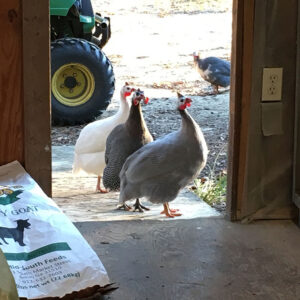
Guinea fowl are medium-sized game birds native to Africa, belonging to the family Numididae. The most common domesticated species is the helmeted guinea fowl (Numida meleagris), named for the bony casque on its head. They are ground-nesting birds that prefer to roost in trees at night. Guinea fowl are social animals, living in flocks, and are renowned for their loud, distinctive calls that serve as alarms against predators. They are exceptionally hardy, resistant to many poultry diseases, and thrive in free-range environments where they consume vast quantities of insects, especially ticks.
Guinea Fowl Varieties We Offer
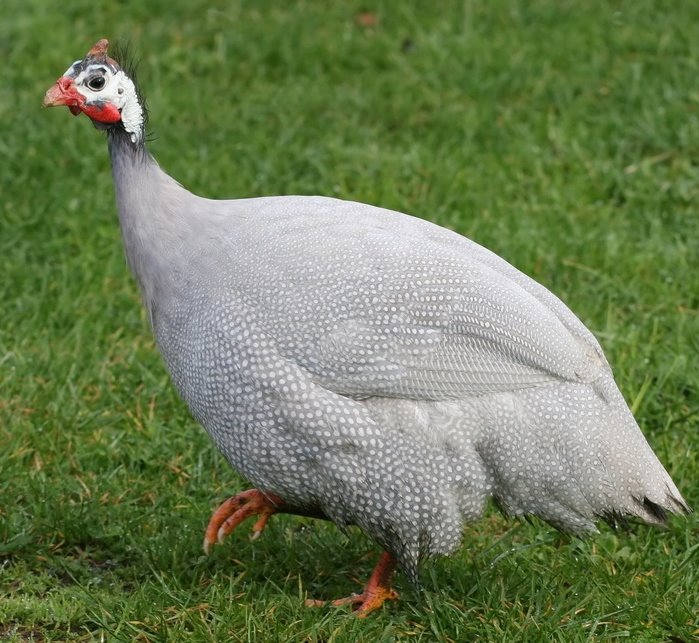
Pearl Guinea Fowl
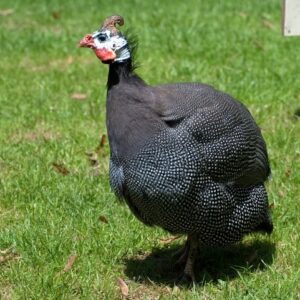
The classic and most common variety, pearl guinea fowl have dark grey plumage covered in neat white spots – like a field of pearls. They have a bright blue head with red wattles and a prominent helmet.
Temperament: Active, alert, and highly social. They bond strongly with their flock and can be somewhat flighty, but with handling from a young age, they can become tame.
Purpose: Exceptional tick control (each bird can eat hundreds of ticks per day), living alarm system, meat and egg production.
Egg Production: 60–100 small, hard-shelled eggs per year, laid in seasonal clutches (spring to early summer). Eggs are richer and creamier than chicken eggs.
Care Requirements: Require secure housing at night (they roost high), plenty of space to forage, and a diet supplemented with game bird feed. They are excellent foragers and need minimal supplemental feed if free-ranging.
Climate Adaptability: Very hardy; tolerate heat well but need protection from extreme cold and damp. Provide a dry, draft-free shelter in winter.
Buyer Suitability: Ideal for homesteaders, farmers with tick problems, and those wanting a natural security system.
Lavender Guinea Fowl
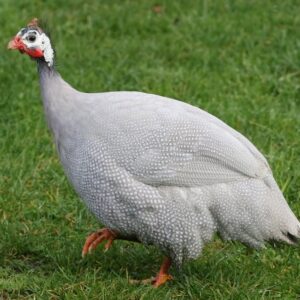
A beautiful color mutation of the pearl, lavender guinea fowl display soft, silvery-blue plumage with pearl-white spots. Their pastel appearance makes them highly sought after by collectors.
Temperament: Same as pearl – alert, social, and active.
Purpose: Ornamental beauty plus all the practical benefits of standard guineas: tick control, alarm calls, eggs, and meat.
Egg Production: Same as pearl.
Care Requirements: Identical to pearl; their lighter color may make them slightly more visible to predators – provide ample cover.
Climate Adaptability: Same as pearl.
Buyer Suitability: Color enthusiasts, breeders looking for rare mutations, and those wanting a prettier guinea.
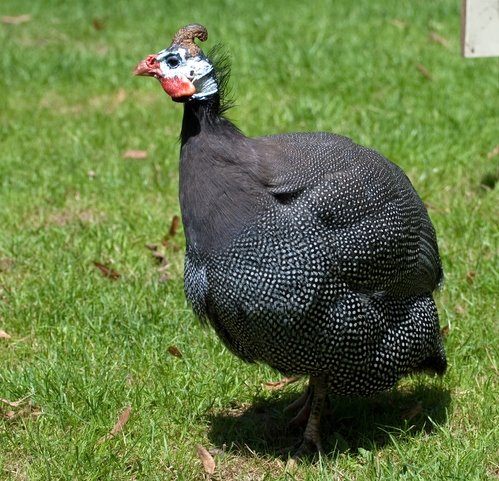
Royal Purple Guinea Fowl
One of the rarest and most striking colors, royal purple guineas have deep purple-black plumage with a metallic sheen, dotted with white spots. The effect is absolutely stunning.
Temperament: Same as other varieties.
Purpose: Collector’s item; show bird; tick control.
Egg Production: Same.
Care Requirements: Same as pearl.
Climate Adaptability: Same.
Buyer Suitability: Serious collectors, exhibition breeders, and anyone wanting a conversation-starting bird.
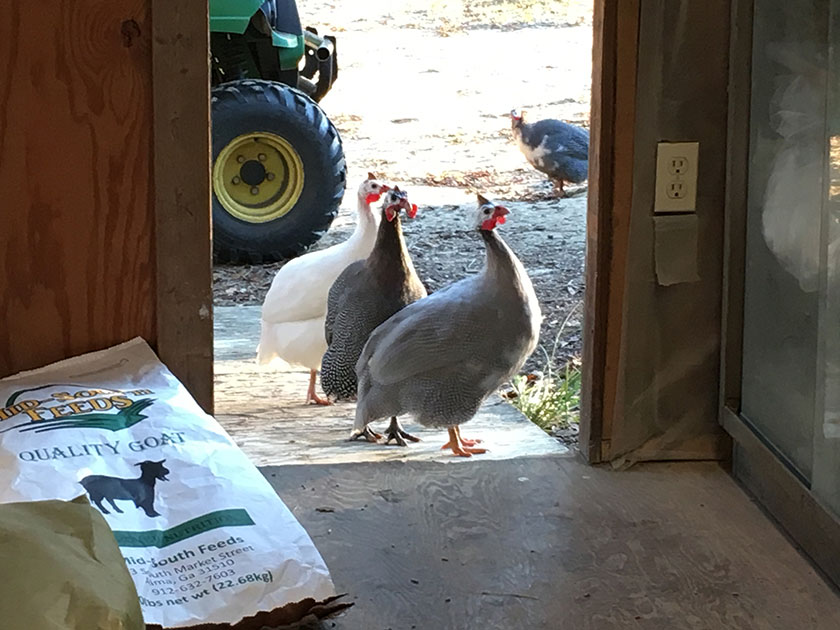
White Guinea Fowl
Description: Pure white plumage, sometimes with a few dark spots. Their all-white appearance is elegant and easy to spot.
Temperament: Same as others.
Purpose: Ornamental, tick control, meat (white feathers may be preferred for dressing).
Care Requirements: White feathers show dirt more easily; need clean environment.
Climate Adaptability: Same.
Buyer Suitability: Those who prefer light-colored birds or want a uniform look.
Vulturine Guinea Fowl
The largest and most spectacular species of guinea fowl, native to East Africa. Vulturine guineas have a striking appearance: a bare blue-and-red head resembling a vulture, a black ruff, and elongated hackles of black and white stripes. They are not true guineas but belong to the genus Acryllium. They are far less common in captivity and require more space and specialized care.
Temperament: More flighty and less domesticated than helmeted guineas. They are stunning but challenging for beginners.
Purpose: Ornamental showpiece; zoological collections; advanced breeders.
Egg Production: Similar to helmeted but less reliable in captivity.
Care Requirements: Need large, secure aviaries; warmer climate or heated shelter; special diet including greens and protein.
Climate Adaptability: Require protection from cold; best suited to warm climates or heated winter housing.
Buyer Suitability: Experienced bird keepers, zoos, and collectors with ample space and resources.
Why Choose Guinea Fowl?
Natural Tick Control
Guinea fowl are legendary for their appetite for ticks. Studies and countless anecdotal reports confirm that a flock of guineas can dramatically reduce tick populations on a property. They consume not only adult ticks but also other pests like grasshoppers, beetles, flies, and even small snakes. Many homesteaders rely on guineas as a chemical-free solution to Lyme disease risks.
Living Security System
Guinea fowl are extremely vigilant and vocal. They will sound a loud, screeching alarm at any unfamiliar sight or sound – from a raccoon in the bushes to a stranger approaching the driveway. This makes them excellent “watchdogs” for your farm or home. They also alert other poultry to danger.
Low-Maintenance Foragers
Unlike chickens, guinea fowl are semi-feral by nature. They prefer to roam and forage for most of their diet, requiring minimal supplemental feed. They are excellent at converting pests into protein and can significantly reduce your feed bill.
Tasty Eggs and Meat
Guinea eggs are smaller and harder-shelled than chicken eggs but have a richer, creamier yolk – perfect for baking or deviled eggs. The meat is lean, flavorful, and often compared to pheasant or wild game. It’s lower in fat and cholesterol than chicken.
Hardy and Disease-Resistant
Guineas are remarkably robust birds, resistant to many common poultry diseases. They thrive in free-range conditions and are less susceptible to parasites than chickens when given proper space.
Guinea Fowl vs. Chickens: Key Differences
| Aspect | Guinea Fowl | Chickens |
|---|---|---|
| Pest Control | Excellent – eat ticks, insects, even snakes | Good, but less efficient |
| Noise Level | Very loud – excellent alarms | Moderate; roosters crow |
| Temperament | Flighty, less cuddly | Tame, handleable |
| Egg Production | 60–100/year, seasonal | 200–300/year, year-round |
| Meat | Lean, gamey flavor | Milder, fattier |
| Housing | Roost in trees; need secure night enclosure | Coop-dependent |
| Flying Ability | Strong fliers; can clear fences | Limited flight |
| Broodiness | Often hide nests; can be poor mothers | Variable |
| Diet | 80% forage possible | Require more supplemental feed |
Guinea Fowl Sounds: What Their Calls Mean
Guineas are famous for their vocalizations. Understanding their calls helps you interpret what’s happening in your flock.
-
Alarm Call: A loud, harsh, repeated “chit-chit-chit” or “keet-keet-keet.” Signals danger from predators or intruders. The entire flock may join in.
-
Food Call: A softer, rhythmic “tuk-tuk-tuk” used when foraging; hens may use it to call keets to food.
-
Contact Call: A two-syllable “chi-chi” or “kek-kek” to keep the flock together.
-
Mating Call: Males produce a unique one-syllable “chi” sound, while females have a two-syllable “buck-wheat” or “put-rock” call. This is the most reliable way to sex adult guineas.
-
Contentment Sounds: Soft purring or peeping when feeding or dust bathing.
Fun Fact: Female guinea fowl are the ones that make the two-syllable “buck-wheat” call; males emit a single-syllable “chi” sound.
Guinea Fowl Eggs
Color and Size: Guinea fowl eggs are light brown to speckled tan, with a very hard shell. They are about two-thirds the size of a large chicken egg.
Taste and Nutrition: The yolk is larger relative to white, and the flavor is richer, creamier, and more intense than chicken eggs. They are higher in protein and lower in cholesterol.
Laying Season: Guineas lay seasonally, typically from spring to early summer (March to September in the Northern Hemisphere). They often hide their nests in tall grass, making egg collection a treasure hunt.
Cooking Uses: Excellent for baking, deviled eggs, or any recipe where a rich egg flavor is desired. Their hard shells make them great for decorating.
Guinea Fowl Meat
Guinea meat is lean, dark, and flavorful – often described as a cross between chicken and pheasant. It’s lower in fat and calories than chicken, making it a healthy alternative. The breast meat is drier than chicken and benefits from moist cooking methods like braising, roasting with bacon, or slow cooking. Popular dishes include roast guinea fowl, guinea fowl casserole, and confit.
Guinea Fowl Care Guide
Housing
Guinea fowl need a secure shelter at night to protect them from predators. They prefer to roost high, so provide sturdy perches 4–6 feet off the ground. The coop should be draft-free but well-ventilated. Provide 3–4 square feet per bird inside. Unlike chickens, guineas may refuse to enter a coop if not trained from a young age. Starting with keets and confining them for several weeks helps establish the coop as home.
Flight Control
Guineas are strong fliers and can easily clear 6-foot fences. To keep them contained, you can:
-
Clip one wing (trim primary feathers on one side)
-
Provide a covered run
-
Raise them from keets and train them to return to the coop at night with treats
Diet
If free-ranging, guineas will find most of their own food – insects, seeds, grass, and small reptiles. Supplement with game bird feed (20–24% protein for keets, 16–18% for adults). Provide grit and fresh water at all times.
Winter Care
Guineas are cold-hardy but need dry, draft-free shelter. Ensure water doesn’t freeze. Increase supplemental feed in winter as foraging diminishes.
Health
Guineas are generally healthy but can be susceptible to:
-
Coccidiosis in keets – keep brooder clean and use medicated starter
-
Respiratory infections – ensure good ventilation
-
External parasites – provide dust baths with diatomaceous earth
-
Injuries from flying into fences – use visible netting
Breeding
Guineas pair up in spring. Hens lay clutches of 20–30 eggs in hidden nests. They are often poor setters; many breeders use incubators or bantam chickens to hatch eggs. Incubation period: 26–28 days. Keets are delicate and need heat (95°F first week, decreasing 5°F per week) and high-protein starter.
FAQ Section: Guinea Fowl
General Questions
Q: What is a guinea fowl?
A: A guinea fowl is a medium-sized game bird native to Africa, domesticated for pest control, alarm calling, and meat and egg production. The helmeted guinea fowl is the most common domestic species.
Q: Are guinea fowl good pets?
A: Guinea fowl are not cuddly pets like chickens. They are wary, flighty, and bond with their flock rather than humans. However, they can become tame if hand-raised and provide endless entertainment with their antics.
Q: How long do guinea fowl live?
A: Guinea fowl can live 10–15 years in captivity with good care.
Q: Are guinea fowl noisy?
A: Yes, guinea fowl are very vocal. Their loud alarm calls are excellent for security but may disturb close neighbors. They are not suitable for suburban backyards with noise restrictions.
Q: Do guinea fowl fly?
A: Yes, they are strong fliers and can clear fences up to 6 feet. Wing clipping or covered runs are necessary for containment.
Pest Control
Q: Do guinea fowl eat ticks?
A: Absolutely. Guinea fowl are voracious tick eaters. They will consume hundreds of ticks per day, making them a natural solution for tick control on properties.
Q: How many guinea fowl do I need for tick control?
A: A small flock of 6–12 birds is usually sufficient for 1–5 acres. They roam widely and can cover large areas.
Q: Do guinea fowl eat snakes?
A: Guinea fowl will mob and sometimes kill small snakes, though they don’t typically eat them. They are effective at deterring snakes from an area.
Sounds & Sexing
Q: What sound does a guinea fowl make?
A: Guinea fowl make various sounds: a loud alarm call (“chit-chit-chit”), a soft contact call (“kek-kek”), and a unique two-syllable “buck-wheat” call made only by females.
Q: How can you tell a male from a female guinea fowl?
A: The most reliable method is their call: females say “buck-wheat” (two syllables), males say “chi” (one syllable). Males also have larger helmets and wattles, but this can be unreliable.
Q: Are male or female guinea fowl louder?
A: Both sexes are vocal, but females have the distinctive two-syllable call that many people find louder.
Eggs & Meat
Q: How many eggs do guinea fowl lay?
A: Guinea hens lay 60–100 eggs per year, seasonally from spring to early summer. They lay in clutches and often hide their nests.
Q: What color are guinea fowl eggs?
A: Guinea eggs are light brown to tan, often speckled, with very hard shells.
Q: Do guinea fowl eggs taste different from chicken eggs?
A: Yes, they are richer and creamier, with a higher yolk-to-white ratio. Many people prefer them for baking.
Q: What does guinea fowl taste like?
A: Guinea meat is lean, dark, and gamey, similar to pheasant. It’s lower in fat than chicken and benefits from moist cooking methods.
Care & Management
Q: What do guinea fowl eat?
A: In free-range settings, they eat insects, ticks, grasshoppers, seeds, grass, and small reptiles. Supplement with game bird feed and grit.
Q: Can guinea fowl live with chickens?
A: Yes, they can coexist, but there are risks. Guineas may bully chickens, especially roosters, and can introduce diseases. Introduce them carefully and provide ample space.
Q: Do guinea fowl need a coop?
A: They need secure shelter at night to protect from predators. They prefer roosting high, so provide perches.
Q: Can guinea fowl survive winter?
A: Guinea fowl are cold-hardy but need a dry, draft-free shelter. Provide extra feed in winter and ensure water doesn’t freeze.
Q: How to raise guinea fowl keets?
A: Keets need a brooder with heat (95°F first week, decreasing 5°F weekly), high-protein game bird starter, and clean water. They are more delicate than chicks and prone to dampness and chilling.
Q: Are guinea fowl hard to raise?
A: Keets require extra care, but adults are very low-maintenance. They are excellent foragers and need minimal intervention once established.
Purchasing & Breeding
Q: Where can I buy guinea fowl?
A: OrderExoticPoultry.com offers NPIP-certified guinea fowl in pearl, lavender, royal purple, white, and vulturine varieties. We ship nationwide with live arrival guarantees.
Q: How much do guinea fowl cost?
A: Prices vary by variety and age. Pearl keets: $5–10 each. Lavender/royal purple: $10–25 each. Started birds: $15–40. Adults: $25–60. Vulturine guineas are significantly more expensive ($100–300+).
Q: How many guinea fowl should I start with?
A: Guineas are social and need at least 4–6 birds. A small flock of 6–12 works well for most properties.
Q: Are guinea fowl easy to breed?
A: Breeding can be challenging because hens often hide nests and may not sit well. Incubators or broody chickens are commonly used to hatch eggs.
Q: What is the incubation period for guinea fowl eggs?
A: Guinea eggs take 26–28 days to hatch. Incubate at 99.5°F with 45–55% humidity, increasing to 65–70% during lockdown.
Add Nature’s Pest Control to Your Property
Rare Color Selection: We offer the widest variety of guinea fowl colors available – from classic pearl to rare lavender, royal purple, and spectacular vulturine.
Current Availability:
| Variety | Keets (Day-Old) | Started Birds | Adults/Breeding Pairs | Notes |
|---|---|---|---|---|
| Pearl Guinea Fowl | ✓ Available | ✓ Available | Limited | The classic tick eater |
| Lavender Guinea Fowl | Limited | Contact | Rare | Stunning pastel beauty |
| Royal Purple Guinea Fowl | Very Rare | Contact | Rare | Deep purple elegance |
| White Guinea Fowl | ✓ Available | Limited | Contact | Pure white presence |
| Vulturine Guinea Fowl | Contact | Contact | Contact | Spectacular showpiece |
Secure Your Guinea Fowl Today:
-
Browse available varieties and select your flock
-
Choose quantity and age (keets, started, adults)
-
Place your deposit to secure your place in our hatching schedule
-
Receive confirmation and estimated shipment date
-
Prepare your property for your new pest-control team
Bulk & Breeder Inquiries:
Need a larger flock for serious tick control or breeding? We offer wholesale pricing on orders of 25+ keets. Contact us for custom quotes.
Early Reservations Essential
Rare colors (lavender, royal purple, vulturine) are produced in limited numbers each season and often sell out months in advance. Contact us to reserve your birds today.
ORDER GUINEA FOWL NOW
NPIP Certified • Live Arrival Guaranteed • Rare Color Varieties • Nationwide Shipping
Why Choose Us for Your Guinea Fowl?
-
All major varieties – pearl, lavender, royal purple, white, vulturine
-
NPIP-certified disease-free flock
-
Expert shipping with live arrival guarantee
-
Keets, started birds, and adults available
-
Ongoing support from guinea fowl specialists
| Breed | Vulturine, Helmeted, white |
|---|---|
| Gender | Hens, Roosters |
Be the first to review “Guinea fowl for sale”
Related products
Exotic Chicken Breeds
Exotic Chicken Breeds
Exotic Chicken Breeds
Exotic Chicken Breeds
Exotic Chicken Breeds
Exotic Chicken Breeds
Exotic Chicken Breeds
Exotic Chicken Breeds
Reviews
There are no reviews yet.