
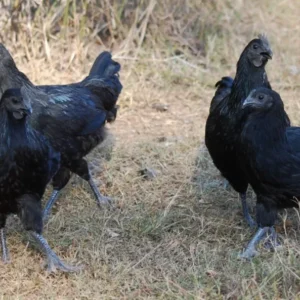
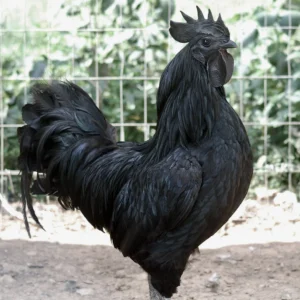
Ayam cemani for sale
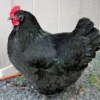
Price range: $250.00 through $550.00
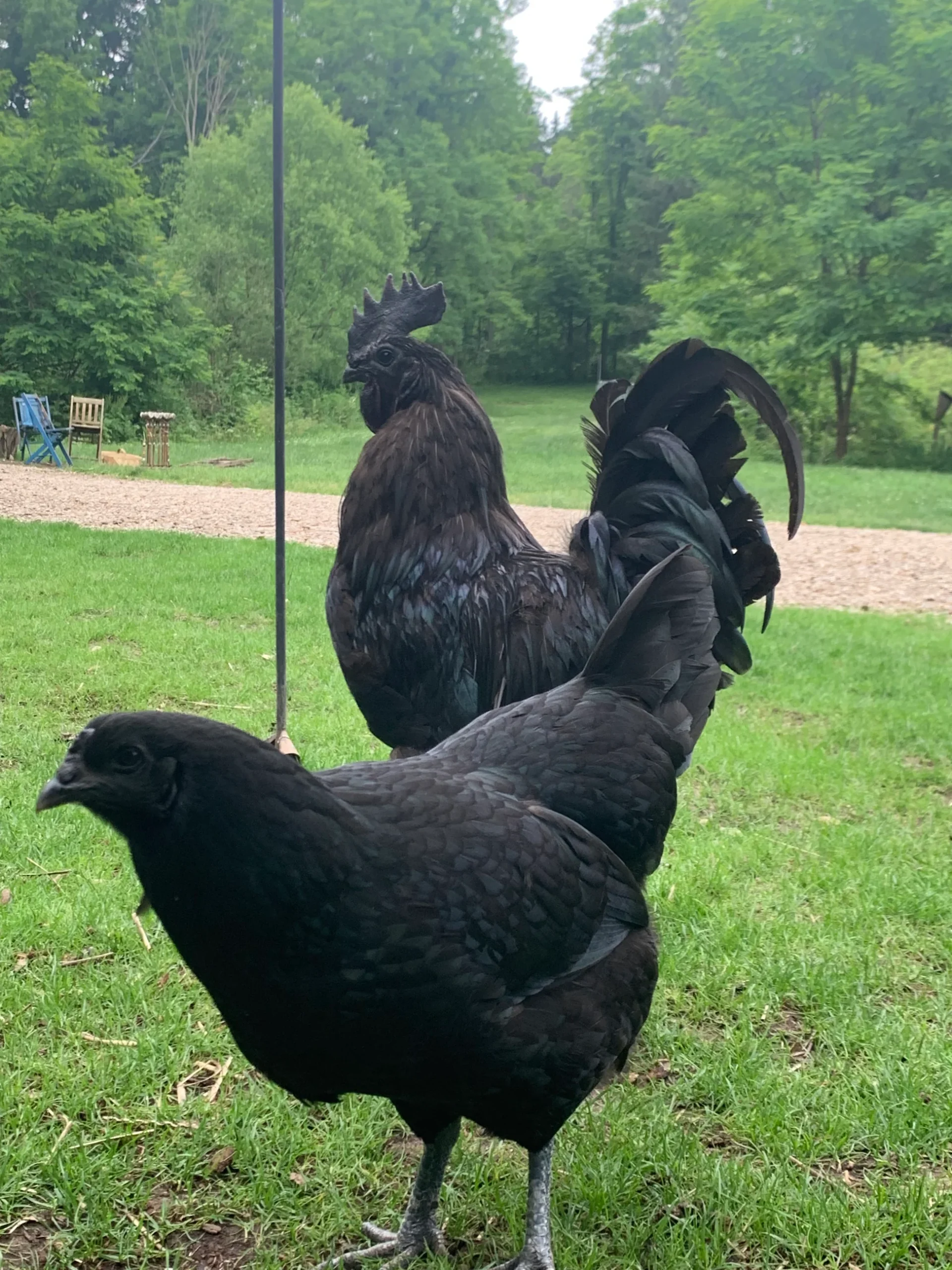
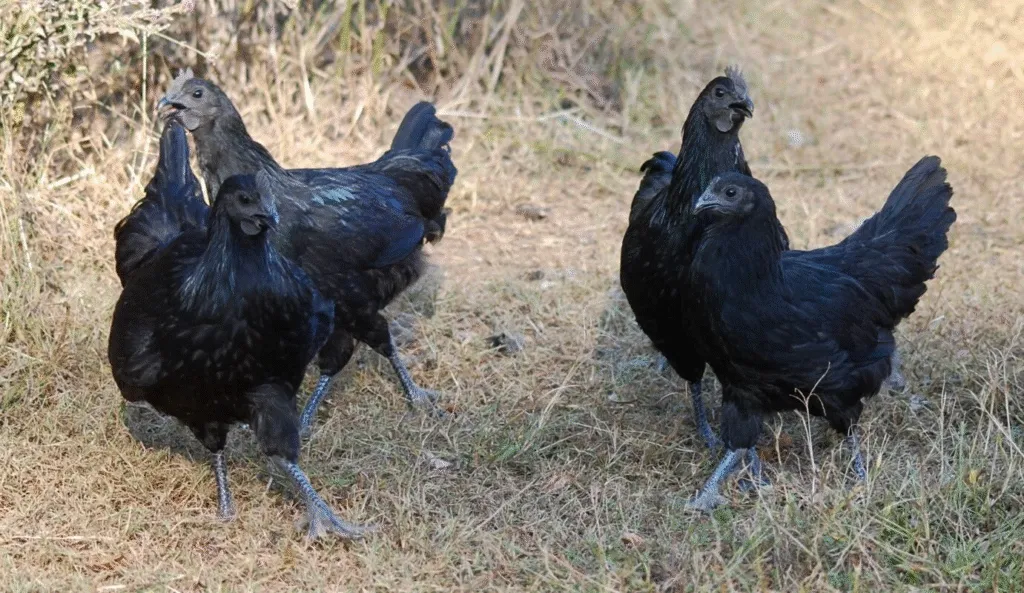
Ayam Cemani chickens are one of the rarest and most striking poultry breeds in the world, prized for their entirely black appearance—from feathers and skin to comb and legs. Highly sought after by collectors, breeders, and specialty poultry enthusiasts, they bring exclusivity and prestige to any flock.
Ayam Cemani: The Complete Guide to the World’s Most Extraordinary All-Black Chicken
Ayam cemani—the legendary “Lamborghini of poultry”—stands alone in the chicken world as the only breed truly black from beak to bones. This Indonesian treasure carries a genetic condition called fibromelanosis that pigments not just feathers, but skin, muscles, organs, and even bone marrow in the deepest ebony. At OrderExoticPoultry.com, we offer NPIP-certified, health-guaranteed ayam cemani for sale from premier bloodlines, including the coveted Raven line and Greenfire Farms genetics. Whether you’re a serious collector, breeding program developer, or simply captivated by nature’s most extraordinary creation, our Ayam Cemani represent the pinnacle of rare poultry.
What Are Ayam Cemani Chickens?
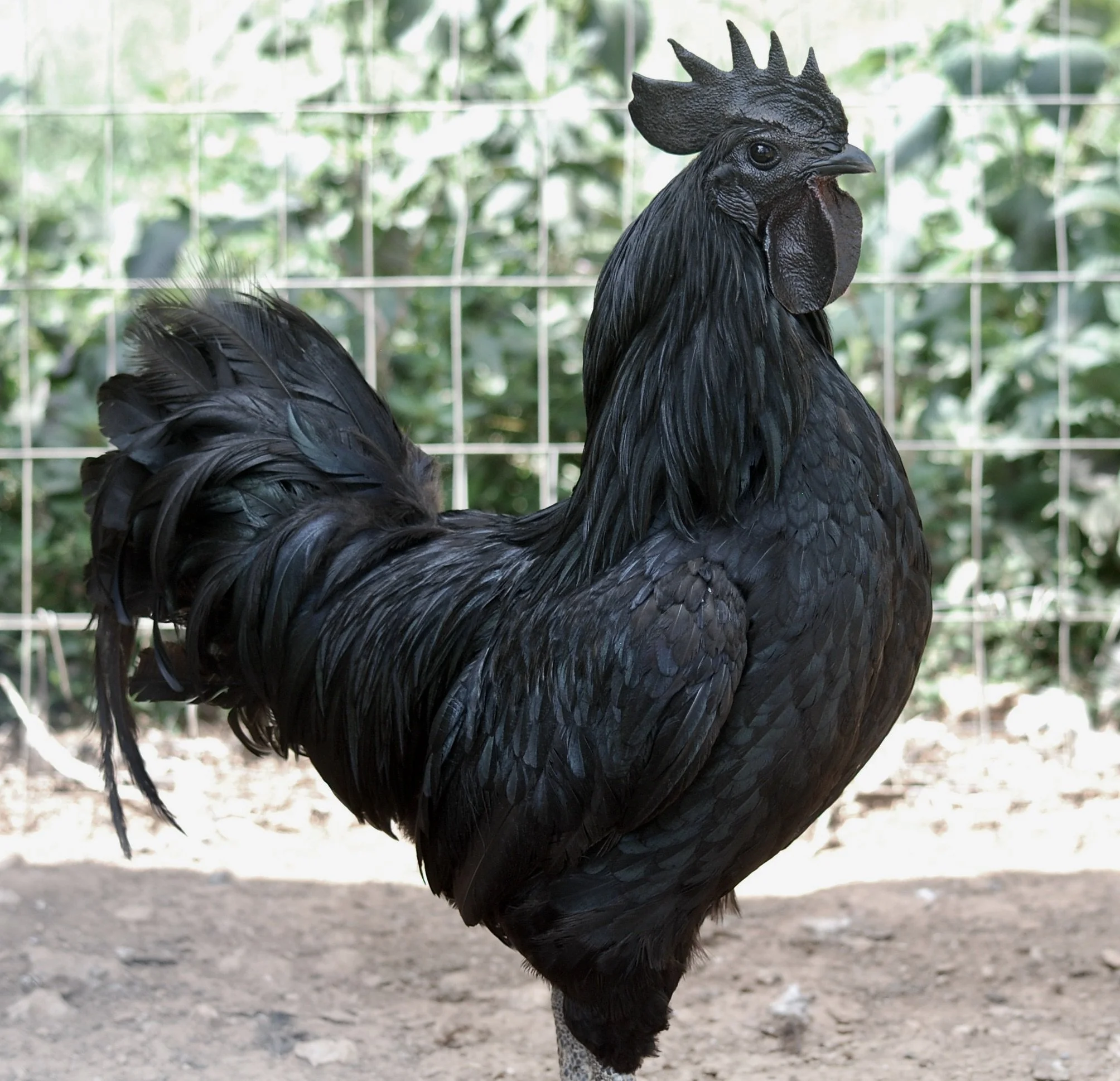
Ayam cemani chickens are a rare Indonesian breed originating from Central Java, characterized by complete hyperpigmentation caused by the fibromelanosis gene. Every part of the bird—feathers, skin, beak, comb, wattles, tongue, meat, bones, and internal organs—is black. Despite their dramatic appearance, they lay cream to light pinkish eggs (not black), weigh 3.5–5 pounds, and possess calm, friendly temperaments. They’re prized for ornamental, ceremonial, and collector purposes.
Ayam Cemani Varieties & Bloodlines
Standard Ayam Cemani
Description: The original Indonesian type, ayam cemani chickens display solid black plumage with an iridescent beetle-green sheen in sunlight. Their combs are single and black, wattles black, eyes dark brown to black, and even their tongue and mouth lining are black. They have a graceful, upright carriage with a moderately long back and full tail.
Fibromelanosis Explained: This genetic condition causes melanin hyperpigmentation throughout connective tissues. Unlike typical black chickens that only have black feathers, Ayam Cemani’s internal organs—including heart, liver, and reproductive tract—are darkly pigmented. The meat appears dark, and bones are black or dark gray.
Temperament: Surprisingly calm and friendly given their dramatic appearance. Ayam Cemani are curious, handleable, and integrate well into mixed flocks. They’re not flighty or aggressive, making them manageable despite their exotic status.
Purpose: Primarily ornamental and collector’s item; ceremonial use in their native Indonesia; breeding stock for rare genetics; conversation-starting flock additions.
Egg Production: 80–120 cream to light pinkish eggs annually. Hens are not prolific layers—their value lies in genetics and appearance, not egg production. They typically begin laying at 5–7 months.
Care Requirements: Standard poultry care with attention to cold protection (tropical origin). Their black feathers absorb heat, making them heat-tolerant but potentially cold-sensitive without proper housing.
Climate Adaptability: Excellent heat tolerance; moderate cold tolerance with protection. Their dark coloration is an advantage in sun but requires management in freezing temperatures. Provide heated waterers and draft-free housing in northern states.
Buyer Suitability: Collectors, breeders, exotic poultry enthusiasts, and those wanting the ultimate conversation piece in their flock.
Greenfire Farms Line
Description: The Greenfire Farms bloodline represents the first Ayam Cemani imported to the United States, establishing the breed standard in America. These birds are known for exceptional conformation, consistent black coloration, and documented lineage.
Distinguishing Features: Deep black plumage with intense beetle-green sheen; consistent fibromelanosis expression; reliable breed type meeting APA standards-in-progress.
Temperament: Selected for docility over generations; particularly calm and people-oriented.
Purpose: Foundation breeding stock; exhibition quality; genetic preservation.
Care Requirements: Same as standard; these valuable birds warrant enhanced predator protection and health monitoring.
Climate Adaptability: Well-adapted to U.S. conditions after generations of selective breeding; hardier than recent imports.
Buyer Suitability: Serious breeders, exhibition enthusiasts, and those wanting documented, proven genetics.
Raven Line
Description: The Raven line represents a distinct bloodline developed by dedicated U.S. breeders focusing on maximum melanin expression and consistent type. These birds are prized for their jet-black appearance with minimal iridescence variation.
Distinguishing Features: Extremely dark throughout; often described as “blacker than black”; consistent type across generations; selected specifically for fibromelanosis intensity.
Temperament: Bred for temperament alongside color; calm and manageable.
Purpose: Premium breeding stock; color-focused breeding programs; collector’s choice for maximum black expression.
Care Requirements: Same as standard; premium value warrants premium care.
Climate Adaptability: U.S.-bred for multiple generations; excellent adaptation to American climates.
Buyer Suitability: Collectors seeking maximum pigmentation; breeders wanting to enhance melanin expression in their lines.
Bantam Ayam Cemani
Description: Miniature versions of standard Ayam Cemani, maintaining all breed characteristics—complete fibromelanosis, black plumage, black skin—at approximately 1/3 the size. True bantam Ayam Cemani are exceptionally rare and highly sought-after.
Distinguishing Features: All the dramatic appearance of standards in a compact package; proportional reduction maintaining breed type; perfect for smaller properties.
Temperament: Often even more personable than standards; their small size makes them approachable and manageable.
Purpose: Ornamental companions; small-scale breeding; ideal for suburban settings with space restrictions.
Egg Production: 60–100 small cream eggs annually; proportional to size.
Care Requirements: Same principles scaled down; more vulnerable to predators; require excellent protection.
Climate Adaptability: More cold-sensitive due to size; require draft-free housing in winter.
Buyer Suitability: Urban and suburban keepers with space limits; collectors seeking rarest form; those wanting Ayam Cemani presence in smaller spaces.
Ayam Cemani Cross (Hybrids)
Description: Purpose-bred crosses combining Ayam Cemani genetics with other breeds (often Silkies, Leghorns, or Rhode Island Reds) for specific outcomes—enhanced cold hardiness, increased egg production, or unique color patterns.
Distinguishing Features: Variable expression of fibromelanosis; may show black pigmentation in skin but not internal organs; often display unique patterns combining black with other colors.
Temperament: Variable depending on cross; often inherit calm disposition from Ayam Cemani parent.
Purpose: Creating new color varieties; improving cold hardiness; producing unique ornamental birds; education about fibromelanosis inheritance.
Care Requirements: Standard care; often hardier than pure Ayam Cemani.
Climate Adaptability: Usually excellent due to hybrid vigor; may be bred specifically for cold tolerance.
Buyer Suitability: Those wanting Ayam Cemani characteristics with enhanced hardiness or production; breeders experimenting with genetics; beginners wanting introduction to fibromelanosis birds at lower cost.
Comparison: Ayam Cemani vs. Similar Black Breeds
| Breed | Fibromelanosis | Internal Black | Egg Color | Origin | Rarity |
|---|---|---|---|---|---|
| Ayam Cemani | Full expression | Complete (bones, meat, organs) | Cream/pinkish | Indonesia | Extremely rare |
| Svart Höna | Full expression | Complete | Cream | Sweden | Rare |
| Kadaknath | Full expression | Complete (meat, bones) | Brown | India | Rare |
| Black Silkie | Partial | Skin only (not bones/meat) | Cream/tinted | China | Common |
| Black Sumatra | No | Feathers only | White/tinted | Indonesia | Uncommon |
Why Choose OrderExoticPoultry.com
Health Guarantees
Every Ayam Cemani chicken ships with our comprehensive 48-hour health guarantee. Given the significant investment these birds represent, we provide enhanced coverage and personally inspect each bird before shipping.
NPIP Compliance
Our breeding facilities maintain active National Poultry Improvement Plan certification (NPIP #XX-XXXX), ensuring your birds come from pullorum-typhoid clean stock. We provide official documentation with every shipment—essential for interstate transport and breeding programs.
Premier Bloodlines
We maintain separate breeding programs for Greenfire Farms line, Raven line, and select import genetics. Each bird comes with lineage documentation tracing back to foundation stock. No mixing—you get pure genetics matching your order.
Ethical Breeding Standards
We limit breeding pairs to preserve genetic diversity and prevent inbreeding. Our Ayam Cemani receive spacious housing, natural lighting, premium nutrition, and individual attention throughout development. We never compromise welfare for volume.
Live Arrival Guarantee
We guarantee live delivery of all poultry shipments to all 50 states. Given the value of Ayam Cemani, we offer expedited shipping options and enhanced packaging for these precious birds. In the unlikely event of transit issues, we offer immediate resolution.
U.S. Shipping Expertise
With specialized experience shipping high-value rare breeds, we understand the logistics of safe Ayam Cemani transport. We monitor weather patterns nationwide, delay shipments when conditions threaten safety, and use priority/express services exclusively for these valuable birds.
Transparency & Trust Signals
-
Open farm visits by appointment (schedule online)
-
Verified customer reviews from Ayam Cemani buyers
-
Third-party health certifications available
-
Detailed breeding records and lineage documentation
-
Member of American Poultry Association
-
Active participant in rare breed conservation
-
References available from previous Ayam Cemani buyers
-
Genetic testing documentation available upon request
6. Shipping & Delivery Across the U.S.
Safe Transport Methods for High-Value Birds
All Ayam Cemani shipments receive premium handling:
-
Day-old chicks: Specialized ventilated containers with hydrated gel packs; heat packs in cold weather; cooling elements in summer; priority/express shipping only
-
Started pullets and adults: Individual compartments preventing injury; temperature-controlled packaging; real-time tracking with text updates
-
Breeding pairs: Custom shipping arrangements with express delivery and signature confirmation
What Customers Receive
-
Healthy, inspected Ayam Cemani matching your exact order and bloodline
-
NPIP certification documentation with flock ID
-
Detailed lineage documentation (3+ generations where available)
-
Comprehensive care guide specific to Ayam Cemani
-
Breed information card with characteristics and expectations
-
24/7 post-arrival support contact (phone, email, text)
-
Discount code for future orders (10% off next purchase)
-
Access to private breeder community for ongoing support
Timeline Expectations
-
Day-old chicks: Ship Monday–Wednesday via priority express; arrive within 1–2 days. Hatch dates coordinated with your order.
-
Started pullets (8–16 weeks): Scheduled shipments based on weather and destination; typically 1–2 day express transit.
-
Adult birds and breeding pairs: Custom shipping arrangements; 1-day express delivery with tracking and arrival coordination.
-
Hatching eggs: Weekly shipments year-round with tracking, insurance, and proper incubation packaging.
Buyer Reassurance
We maintain a no-ship list when temperatures exceed safe ranges (below 30°F or above 85°F for Ayam Cemani—more conservative than standard breeds). Our shipping team contacts every buyer with:
-
Tracking information within 1 hour of shipment
-
Detailed arrival preparation instructions
-
What to expect upon delivery (including normal stress responses)
-
Post-arrival care protocols specific to Ayam Cemani
-
Emergency contact information for immediate concerns
Ayam Cemani Care Guide
Housing Requirements
Space Needs:
-
Standard Ayam Cemani: 4–5 square feet per bird inside coop, 10–15 square feet per bird in runs (minimum). Their value warrants generous space.
-
Bantam Ayam Cemani: 2–3 square feet per bird inside, 6–8 square feet per bird in runs.
-
Free-range access: Beneficial but requires exceptional predator protection—these birds represent significant investment.
Coop Specifications:
-
Roosting bars: 8–10 inches per bird; 2×2 inch or wider flat bars. Their tropical origin means they appreciate roosts away from drafts.
-
Nest boxes: One per 4–5 hens; 12×12×12 inches minimum; line with clean bedding.
-
Ventilation: Critical—adequate roof-level ventilation without drafts at bird level. Their dense feathering requires good airflow.
-
Lighting: Natural light preferred; supplemental lighting (14–16 hours) can boost winter egg production if desired.
Temperature Management:
-
Winter: Provide heated waterers, draft-free housing, deep litter method, and potentially supplemental heat when temperatures drop below freezing. Their black feathers absorb heat but their tropical origin means they’re less cold-adapted than European breeds.
-
Summer: Excellent heat tolerance; provide deep shade, ventilation, frozen treats, and multiple water sources. Their black coloration is actually beneficial in sun (absorbs UV, provides warmth) but requires management in extreme heat.
Predator-Proofing:
Given their value, Ayam Cemani require exceptional protection:
-
Use ½-inch hardware cloth (not chicken wire) for all openings
-
Bury fencing 12–18 inches deep with outward apron against digging predators
-
Double-latch all doors with predator-proof locks
-
Automatic coop doors with backup systems
-
Consider electric fencing for runs
-
Livestock guardian animals for free-range operations
-
Motion-activated lights and cameras for monitoring
Feeding Protocol
Age-Appropriate Nutrition:
| Age | Feed Type | Protein % | Notes |
|---|---|---|---|
| 0–8 weeks | Chick starter | 20–22% | High-quality crumbles; medicated optional |
| 8–20 weeks | Grower feed | 16–18% | Transition gradually; monitor condition |
| 20+ weeks | Layer feed | 16% | For laying hens; pellets or crumbles |
| Non-layers | Maintenance feed | 14–16% | For roosters, non-laying hens |
| All ages | Grit | Free-choice | Essential for digestion |
| Layers only | Oyster shell | Free-choice | Separate from feed |
Supplemental Foods:
-
Greens: Kale, lettuce, spinach, chopped forage
-
Vegetables: Pumpkin, squash, carrots, sweet potatoes
-
Fruits: Berries, melon, banana (limited)
-
Protein: Black soldier fly larvae, mealworms (treats only)
-
Herbs: Oregano, thyme, mint (immune support)
Winter Feeding Adjustments:
-
Increase feed availability (birds burn more calories maintaining warmth)
-
Offer warmed water multiple times daily
-
Provide scratch grains in evening (digestion creates body heat)
-
Ensure free-choice oyster shell and grit year-round
Water Requirements:
-
Fresh, clean water daily minimum
-
Heated waterers essential in freezing conditions
-
Clean waterers weekly with diluted bleach solution
-
Multiple water stations in summer heat
-
Electrolytes during stress (shipping, extreme weather)
Health Management
Common Health Issues:
-
Cold stress: Most significant concern for this tropical breed in northern states
-
External parasites: Mites, lice—check regularly; their dark color makes visual detection difficult
-
Internal parasites: Worms—regular deworming program based on risk
-
Respiratory infections: Watch for sneezing, wheezing—isolate affected birds immediately
-
Heat stress: Monitor during extreme heat despite their heat tolerance
-
Genetic considerations: Small gene pool requires careful breeding management
Preventive Care:
-
Weekly health inspections (check comb, eyes, nostrils, feet, feathers, vent)
-
Clean coop monthly with deep clean quarterly
-
Dust bath areas (diatomaceous earth mixed with sand/soil)
-
Quarantine new birds 30–60 days before introducing (their value warrants extra caution)
-
Vaccinate for Marek’s disease if recommended in your area
-
Document health observations for breeding records
Signs of Healthy Ayam Cemani:
-
Bright, clear eyes (dark brown to black)
-
Clean, glossy black feathers with green sheen
-
Black comb and wattles (healthy dark color, not pale)
-
Active foraging behavior
-
Clear nostrils and breathing
-
Firm, well-formed droppings
-
Alert, curious demeanor
Breeding Management
Genetics of Fibromelanosis:
Fibromelanosis is inherited as an autosomal dominant trait with incomplete penetrance. Understanding this is crucial for breeding programs:
-
Breeding two fibromelanosis birds produces mostly fibromelanosis offspring
-
Some variation in expression occurs (some birds “blacker” than others)
-
Internal pigmentation may not perfectly correlate with external appearance
-
Selection for maximum expression requires multiple generations
Selecting Breeding Stock:
-
Choose birds with maximum external black (tongue, comb, skin, feet)
-
Prioritize those from lines with documented internal pigmentation
-
Select for temperament—docile birds are easier to manage
-
Avoid birds with white feathers (leakage) or pink skin patches
-
Maintain detailed records of lineage and expression
Breeding Ratios:
-
Standard ratio: 1 rooster per 5–7 hens for fertile eggs (conservative due to value)
-
For show-quality: 1 rooster per 4–5 hens ensures better coverage
-
Bantam ratios similar due to smaller size
Incubation Guidelines:
-
Fertility check: 7–10 days after introducing rooster
-
Collect eggs daily, store pointed-end down at 55–60°F
-
Incubation period: 21 days (same as standard chickens)
-
Temperature: 99.5°F (forced air)
-
Humidity: 45–50% days 1–18, 65–70% days 19–21
-
Turn eggs 3–5 times daily through day 18
-
Expect hatch rates similar to other purebreds (60–80% of fertile)
Bloodline Management:
-
Maintain separate breeding lines to preserve genetic diversity
-
Document pedigrees carefully
-
Rotate breeding stock to prevent inbreeding
-
Consider linebreeding for trait consistency, not close inbreeding
-
Network with other breeders for genetic exchange
Seasonal Management
Spring:
-
Breeding season begins
-
Increase protein slightly
-
Prepare for chick season
-
Deep clean coops after winter
-
Predator activity increases with births
Summer:
-
Provide deep shade and excellent ventilation
-
Frozen treats (watermelon, frozen water bottles)
-
Multiple water stations
-
Check for mites more frequently
-
Monitor for heat stress (panting, wings spread)
Fall:
-
Annual molt (feather loss and regrowth)
-
Increase protein during molt (20–22%)
-
Prepare coops for winter
-
Reduce daylight triggers laying slowdown
-
Deep clean before winter
-
Evaluate breeding stock for winter selection
Winter:
-
Heated waterers essential (tropical breed!)
-
Increase feed for energy
-
Deep litter method for warmth
-
Check black combs for frostbite (difficult to see on dark tissue)
-
Ventilation vs. draft balance critical
-
Consider supplemental heat if temperatures drop below 20°F
-
Limit outdoor access in extreme cold
FAQ Section: Ayam Cemani Chickens
Appearance & Identification
Q: What do ayam cemani chickens look like?
A: Ayam Cemani are entirely black—feathers, skin, beak, comb, wattles, tongue, and even internal organs. Their feathers have an iridescent beetle-green sheen in sunlight. They’re medium-sized birds with single combs, dark brown to black eyes, and graceful upright carriage. Every part visible—and invisible—is black.
Q: Are ayam cemani eggs black?
A: No, Ayam Cemani eggs are NOT black. Despite the bird’s complete hyperpigmentation, they lay cream to light pinkish eggs. The eggs are normal in appearance—only the chicken itself is black. This is one of the most common misconceptions about the breed.
Q: What color are ayam cemani eggs?
A: Ayam Cemani lay medium-sized eggs in shades of cream, off-white, or light pinkish-beige. Egg color can vary slightly between individuals but is always in the cream/tinted range—never black, blue, or green. The fibromelanosis gene affects only the bird, not the eggs.
Q: Is ayam cemani meat black?
A: Yes, Ayam Cemani meat is dark gray to black due to fibromelanosis—the same genetic condition that pigments skin and bones. The meat is safe to eat and reportedly flavorful, though these birds are primarily kept for ornamental and breeding purposes rather than meat production.
Q: Are ayam cemani bones black?
A: Yes, Ayam Cemani bones are black or very dark gray. The fibromelanosis gene causes melanin deposition in connective tissues throughout the body, including the periosteum (bone covering) and marrow. This internal black coloring extends to organs, muscles, and even the trachea.
Q: Do ayam cemani have black tongues?
A: Yes, Ayam Cemani have black tongues, along with black mouths, black combs, black wattles, and black skin. The tongue color is one of the earliest indicators of fibromelanosis expression in chicks—a completely black tongue indicates good genetic expression.
Q: How can you tell a male from a female ayam cemani?
A: Males (roosters) are larger (4–5 lbs vs. 3.5–4.5 lbs), have larger combs and wattles, develop pointed hackle and saddle feathers, grow longer tail feathers, and crow. Females are smaller, have rounded feathers, and may show less iridescence. Both sexes are black throughout.
Q: Are there different colors of ayam cemani?
A: True Ayam Cemani are only black. Any bird showing other colors is either a crossbreed or impure. Some breeders are developing “blue” or “splash” varieties through crossing, but these are not pure Ayam Cemani and lack complete fibromelanosis expression.
Egg Production
Q: How many eggs do ayam cemani lay per year?
A: Ayam Cemani are not prolific layers—they produce approximately 80–120 eggs annually, or 1–2 eggs weekly. Production varies by individual genetics, nutrition, and management. Their value lies in their appearance and genetics, not egg output.
Q: When do ayam cemani start laying eggs?
A: Ayam Cemani pullets typically begin laying between 5–7 months of age (20–28 weeks), similar to other Mediterranean-type breeds. Factors affecting onset include hatch season, nutrition, and individual genetics. Spring-hatched chicks often start in fall.
Q: Do ayam cemani lay eggs in winter?
A: Ayam Cemani may slow or pause winter laying without supplemental lighting, especially in colder climates given their tropical origin. With 14–16 hours of artificial light and consistent nutrition, some continue producing, though at reduced rates. Their primary value isn’t winter eggs.
Q: How long do ayam cemani lay eggs?
A: Ayam Cemani hens lay productively for 3–4 years, with peak production in years 1–2. Year one: 80–120 eggs; year two: 70–100 eggs; year three: 50–80 eggs; years four and beyond: declining production. Many continue laying sporadically for 5–6 years.
Q: What color eggs do ayam cemani chickens lay?
A: Ayam Cemani lay eggs in cream, off-white, or light pinkish-beige shades. Despite popular myth, they do NOT lay black eggs. The fibromelanosis gene affects the chicken’s tissues only, not the eggshell pigment. Egg color is consistent across the breed.
Temperament & Behavior
Q: Are ayam cemani friendly?
A: Yes, Ayam Cemani are surprisingly friendly and docile given their dramatic appearance. They’re curious, calm, and handleable with regular interaction. They’re not flighty or aggressive, making them manageable for collectors and breeders despite their exotic status.
Q: Are ayam cemani aggressive?
A: No, Ayam Cemani are not aggressive. Roosters can be protective of hens but are generally manageable with proper handling. Hens rarely show aggression. They integrate well into mixed flocks and are typically calm flock citizens.
Q: Are ayam cemani good with children?
A: With proper supervision and handling, Ayam Cemani can be good with children. Their calm temperament and manageable size make them suitable for supervised interaction. However, their significant value means children should be carefully supervised to prevent accidental injury to the birds.
Q: Do ayam cemani go broody?
A: Ayam Cemani have moderate broodiness tendencies. Some lines retain stronger maternal instincts than others. They’re not known as particularly broody compared to Mediterranean breeds, but individual hens may set eggs reliably. Broody Ayam Cemani make attentive mothers.
Q: Can ayam cemani fly?
A: Ayam Cemani are moderate fliers—they can clear 4–6 foot fences if motivated. Their Mediterranean-type build gives them better flight capability than heavy breeds. For containment, provide 6-foot fencing or clip one wing. Their value warrants secure enclosures.
Q: Are ayam cemani noisy?
A: Ayam Cemani are moderately noisy—about average for chicken breeds. Roosters crow like any rooster; hens sing typical egg songs. They’re not known as exceptionally loud or quiet. Their value means owners often keep them in secure, possibly sound-dampened housing.
Care & Management
Q: How long do ayam cemani chickens live?
A: With proper care—predator protection, quality nutrition, clean housing, and healthcare—Ayam Cemani live 8–10 years on average. Exceptional individuals may reach 12+ years. Their tropical origin means they require good winter management for longevity in northern climates.
Q: How to sex ayam cemani chickens?
A: Sexing Ayam Cemani requires experience. By 8–12 weeks, males develop larger combs and wattles, grow pointed hackle feathers, stand taller, and attempt crowing. Females remain smaller with rounded feathers. Vent sexing at hatch requires expert training—even experts find dark-skinned breeds challenging.
Q: What do ayam cemani chickens eat?
A: Feed age-appropriate complete poultry feeds: chick starter (0–8 weeks, 20–22% protein), grower (8–20 weeks, 16–18%), layer feed (20+ weeks, 16% with calcium). Supplement with greens, vegetables, and limited treats. Always provide free-choice grit and oyster shell for layers.
Q: Are ayam cemani cold hardy?
A: Ayam Cemani have moderate cold hardiness—less than European breeds but manageable with proper care. Their tropical origin means they need protection in freezing weather: heated waterers, draft-free housing, deep litter, and potentially supplemental heat when temperatures drop below 20°F.
Q: Are ayam cemani heat tolerant?
A: Yes, Ayam Cemani are excellent in heat due to their tropical origin and dark coloration (which absorbs UV but also provides warmth adaptation). Provide shade, ventilation, and ample water. They thrive in southern states where heat is a bigger concern than cold.
Q: What kind of coop do ayam cemani need?
A: Ayam Cemani need standard coops with 4–5 square feet per bird inside, 10–15 square feet in runs. Given their value, provide exceptional predator protection: hardware cloth (not chicken wire), buried fencing, secure latches, automatic doors, and potentially electric fencing.
Q: How much space do ayam cemani chickens need?
A: Minimum space: 4–5 square feet per bird inside, 10–15 square feet per bird in run. For 6 Ayam Cemani: 24–30 sq ft coop, 60–90 sq ft run minimum. More space always better. Their value warrants generous, enriched environments reducing stress.
Q: How big do ayam cemani chickens get?
A: Standard Ayam Cemani hens weigh 3.5–4.5 pounds, roosters 4–5 pounds. They’re considered a light breed, similar to Leghorns in size but more compact. Bantam Ayam Cemani hens weigh 16–20 ounces, roosters 20–24 ounces.
Q: What predators eat ayam cemani chickens?
A: Common predators: raccoons (will pull birds through fencing), foxes, coyotes, dogs, hawks, owls, minks, weasels, snakes, opossums, and rats. Given their value and dark color (limited camouflage), provide exceptional protection with hardware cloth, secure runs, and night-locking.
Purchasing & Breeding
Q: How much do ayam cemani chickens cost?
A: Ayam Cemani are among the most expensive chicken breeds. Day-old straight-run chicks: $50–100 each. Sexed pullets: $150–300. Started pullets (8–16 weeks): $250–500. Laying hens: $300–800. Breeding pairs/trios: $800–2,500+ depending on quality, bloodline, and age. Show-quality birds: $2,000–5,000+.
Q: Why are ayam cemani so expensive?
A: Ayam Cemani are expensive due to: extreme rarity (limited breeding populations), complex genetics (fibromelanosis requires careful selection), import costs (foundation stock from Indonesia), low reproduction rates (moderate egg production), high demand (worldwide collector interest), and limited supply (few U.S. breeders).
Q: Where can I buy ayam cemani chickens?
A: OrderExoticPoultry.com offers NPIP-certified Ayam Cemani from premier bloodlines (Greenfire Farms line, Raven line). We ship nationwide with live arrival guarantees. When buying elsewhere, verify NPIP certification, request lineage documentation, and confirm health guarantees before purchasing.
Q: Are ayam cemani rare?
A: Yes, Ayam Cemani are genuinely rare, especially in pure form with complete fibromelanosis expression. The global breeding population is limited, with perhaps a few thousand in the United States. True breeding-quality birds with documented lineage are exceptionally rare.
Q: Where do ayam cemani chickens come from?
A: Ayam Cemani originated in Central Java, Indonesia, specifically in the Kedu region. They were developed by local breeders over centuries, valued for ceremonial and mystical purposes. They were first imported to the United States in the late 1990s and early 2000s by Greenfire Farms and other specialist importers.
Q: Are ayam cemani a heritage breed?
A: In their native Indonesia, Ayam Cemani are an ancient landrace breed. In the United States, they’re considered a rare, developing breed working toward American Poultry Association standardization. They’re included in conservation programs and recognized by the American Livestock Breeds Conservancy.
Q: Can I breed ayam cemani chickens?
A: Yes, but breeding Ayam Cemani requires understanding fibromelanosis genetics, maintaining separate bloodlines, and careful selection for expression. Maintain 1 rooster per 5–7 hens for fertility. Incubation period 21 days. Network with other breeders for genetic diversity—the gene pool is small.
Q: What is the difference between ayam cemani and svart hona?
A: Both carry fibromelanosis and are completely black. Ayam Cemani originated in Indonesia, are smaller (3.5–5 lbs), have single combs, and lay cream eggs. Svart Höna originated in Sweden, are slightly larger, may have pea combs, and lay cream eggs. Both are extremely rare.
Q: What is the difference between ayam cemani and kadaknath?
A: Both carry fibromelanosis. Ayam Cemani originated in Indonesia, have single combs, black skin/meat/bones, and lay cream eggs. Kadaknath originated in India, have pea combs, black skin/meat, and lay brown eggs. Kadaknath are more cold-hardy; Ayam Cemani are more heat-tolerant.
Practical Information
Q: What are ayam cemani chickens used for?
A: Primarily ornamental and collector purposes—they’re kept for their unique appearance, genetic value, and conversation-starting presence. In Indonesia, they have ceremonial significance. Some breeders develop them for exhibition. They’re not practical for meat or significant egg production.
Q: Can you eat ayam cemani chickens?
A: Yes, Ayam Cemani are safe to eat, and their black meat is reportedly flavorful. However, given their extreme rarity and high value (hundreds to thousands of dollars per bird), eating them would be extraordinarily expensive. They’re kept for breeding and collection, not consumption.
Q: Can you eat ayam cemani eggs?
A: Yes, Ayam Cemani eggs are safe to eat and taste like normal chicken eggs. They’re cream-colored on the outside with typical yellow yolks inside—the black pigmentation doesn’t affect the egg contents. Given their rarity, most owners hatch eggs rather than eat them.
Q: What does ayam cemani taste like?
A: Reports describe Ayam Cemani meat as flavorful, slightly gamey, and tender. The black color doesn’t affect taste—it’s a visual characteristic only. However, few people have tasted them given their value. Most descriptions come from their native Indonesia where they’re occasionally consumed ceremonially.
Q: Are ayam cemani good for beginners?
A: No, Ayam Cemani are NOT recommended for beginners. Their extreme value, specific care requirements (especially cold management), and genetic importance mean they’re best suited to experienced poultry keepers who understand rare breed management. Start with standard breeds before investing in Ayam Cemani.
Q: How many ayam cemani should I start with?
A: If you’re experienced enough for Ayam Cemani, start with at least 3–5 birds from unrelated bloodlines to establish a breeding program. A minimum breeding trio (1 rooster, 2 hens) allows genetic diversity. Given their cost, most start with a trio or pair from quality bloodlines.
Q: What is the best bloodline of ayam cemani?
A: “Best” depends on goals. Greenfire Farms line offers documented U.S. foundation genetics with excellent type. Raven line emphasizes maximum melanin expression. Import lines may offer genetic diversity. Choose bloodlines with documentation, health clearances, and proven expression for your specific goals.
Q: Do ayam cemani have any special genetic issues?
A: The fibromelanosis gene itself isn’t harmful—it’s simply a pigment trait. However, the limited gene pool in U.S. Ayam Cemani means careful breeding management is essential to avoid inbreeding depression. Responsible breeders maintain separate lines and exchange genetics to preserve diversity.
Troubleshooting
Q: Why does my ayam cemani have white feathers?
A: White feathers (“leakage”) indicate either: 1) The bird isn’t pure Ayam Cemani, 2) It carries genes from a cross somewhere in its background, or 3) It has poor fibromelanosis expression. True pure Ayam Cemani should have solid black plumage without white. This is considered a fault.
Q: Why does my ayam cemani have pink skin patches?
A: Pink skin patches indicate incomplete fibromelanosis expression or crossbreeding. True Ayam Cemani should have black skin throughout. Pink patches, especially on feet, shanks, or around eyes, suggest the bird isn’t pure or doesn’t fully express the fibromelanosis gene.
Q: Why aren’t my ayam cemani laying eggs?
A: Possible reasons: too young (under 5–7 months), winter with short daylight, stress (especially cold stress for this tropical breed), poor nutrition, illness, or age. Given their moderate production (80–120/year), they naturally lay less than production breeds.
Q: Why are my ayam cemani dying in winter?
A: Ayam Cemani are tropical-origin birds and can die from cold stress without proper winter management. Causes: inadequate heating, drafts, frozen water, insufficient calories, or lack of cold protection. Provide heated waterers, draft-free housing, deep litter, and supplemental heat when temperatures drop below 20°F.
9. Strong Conversion CTA
Own the World’s Most Extraordinary Chicken
Limited Availability: Our Ayam Cemani breeding program produces extremely limited numbers of quality chicks each year. Current inventory across all bloodlines is exceptionally rare—most birds are presold to waiting clients.
Current Bloodline Availability:
| Bloodline | Chicks | Started Pullets | Breeding Pairs | Notes |
|---|---|---|---|---|
| Greenfire Farms Line | Waitlist Only | Limited | Contact | Foundation U.S. genetics |
| Raven Line | Waitlist Only | Limited | Contact | Maximum melanin expression |
| Import Genetics | Contact | Rare | Contact | New bloodline diversity |
| Bantam Ayam Cemani | Extremely Rare | Contact | Contact | Miniature version |
Secure Your Ayam Cemani Today:
-
Contact us to discuss your goals and available bloodlines
-
Place your deposit to secure your place in our hatching schedule
-
Select your birds when available (priority given to deposit holders)
-
Receive documentation including lineage, NPIP certification, and care guides
-
Arrange shipping with our specialized rare-breed transport team
Serious Breeder Inquiries:
Developing a breeding program? We offer:
-
Wholesale pricing on breeding trios and flocks
-
Genetic consultation and breeding guidance
-
Lineage documentation and breeding records
-
Ongoing breeder support and community access
-
Future genetic exchange opportunities
Early Reservations Strongly Recommended
Ayam Cemani availability cannot be guaranteed without a deposit. Most production is presold 6–12 months in advance. Contact us immediately to discuss current waitlist status and expected availability.
SECURE YOUR AYAM CEMANI NOW
NPIP Certified • Live Arrival Guaranteed • Documented Bloodlines • Premier Genetics
Why Wait?
-
Extreme rarity: Less than 1,000 breeding-quality birds in the U.S.
-
Increasing demand: Global interest grows yearly
-
Limited production: Each hen lays only 80–120 eggs annually
-
Bloodline preservation: Our genetics represent years of selective breeding
Serious inquiries only. Ayam Cemani represent a significant investment—we’re here to ensure you receive the quality and support your investment deserves.
| Quantity | 1 Rooster, 1 Hen, A Pair |
|---|
Be the first to review “Ayam cemani for sale”
Related products
Exotic Chicken Breeds
Exotic Chicken Breeds
Exotic Chicken Breeds
Exotic Chicken Breeds
Exotic Chicken Breeds
Exotic Chicken Breeds
Exotic Chicken Breeds
Exotic Chicken Breeds
Reviews
There are no reviews yet.