
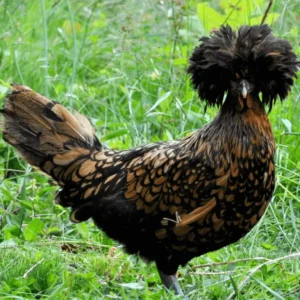
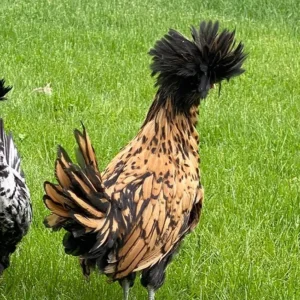
Polish Chickens for Sale
Price range: $50.00 through $480.00
We’re offering purebred Polish chicks from our breeding farm—established bloodline since 1971! These striking crested birds are perfect for exhibition or ornamental flocks. They’re non-setters (rarely go broody), produce white eggs, and have that classic V-shaped comb hidden under magnificent headgear. Bearded and non-bearded varieties available.
Polish Chickens For Sale: Crested “Top Hat” Beauties in Stunning Colors
Polish chickens are the rock stars of the poultry world—with their magnificent crests of feathers erupting from their heads like elaborate pom-poms, they’re impossible to ignore and impossible to forget. These ornamental beauties, despite their name, actually originated in the Netherlands and have captivated chicken keepers for centuries with their unique appearance and gentle dispositions. From the dramatic White Crested Black to the intricate Gold Laced, the rare Tolbunt, and the fluffy Frizzle, Polish chickens come in a breathtaking array of colors and patterns. At OrderExoticPoultry.com, we offer NPIP-certified, health-guaranteed polish chicks for sale in the widest color selection available anywhere in the United States—including rare varieties like Tolbunt, Buff Laced, and Silver Laced. Whether you’re seeking a conversation-starting addition to your backyard flock or show-quality birds for exhibition, our Polish chickens represent the finest of this ancient and beloved breed.
What Are Polish Chickens?
Polish chickens are a European crested breed known for their spectacular crest of feathers on the head. Despite the name, they originated in the Netherlands, not Poland. They’re medium-sized birds weighing 4–6 pounds, with small V-shaped combs (often hidden by the crest), white earlobes, and clean legs. They lay white eggs and are primarily ornamental, prized for exhibition and as backyard curiosities. They come in bearded and non-bearded varieties and an extraordinary range of colors and patterns.
Polish Varieties & Colors We Offer
White Crested Black Polish Chickens
The classic and most recognizable variety, white crested black polish chickens display a dramatic contrast—a solid black body with a pure white crest. This striking combination makes them instant showstoppers. They have black beaks, dark legs, and bright red V-shaped combs nearly hidden by their crest.
Size:
-
Roosters: 5–6 pounds
-
Hens: 4–5 pounds
-
Bantams: 24–30 ounces
Temperament: Docile, calm, but flighty. Polish chickens are gentle birds that can be easily startled—largely because their crest impairs their vision. They’re not typically aggressive and do well in mixed flocks with other docile breeds.
Purpose: Ornamental display; exhibition; conversation-starting backyard birds.
Egg Production: 120–180 small to medium white eggs annually. They’re not bred for production but are reliable layers for an ornamental breed.
Care Requirements: Need special attention to their crest—keep clean and dry to prevent matting and eye irritation. Their vision is limited, so they need protection from predators and careful handling.
Climate Adaptability: Moderate cold hardiness; their crest can collect moisture and ice in winter—provide dry, draft-free housing. Heat tolerant with shade and ventilation.
Buyer Suitability: Ornamental collectors; exhibition enthusiasts; those wanting unique backyard birds.
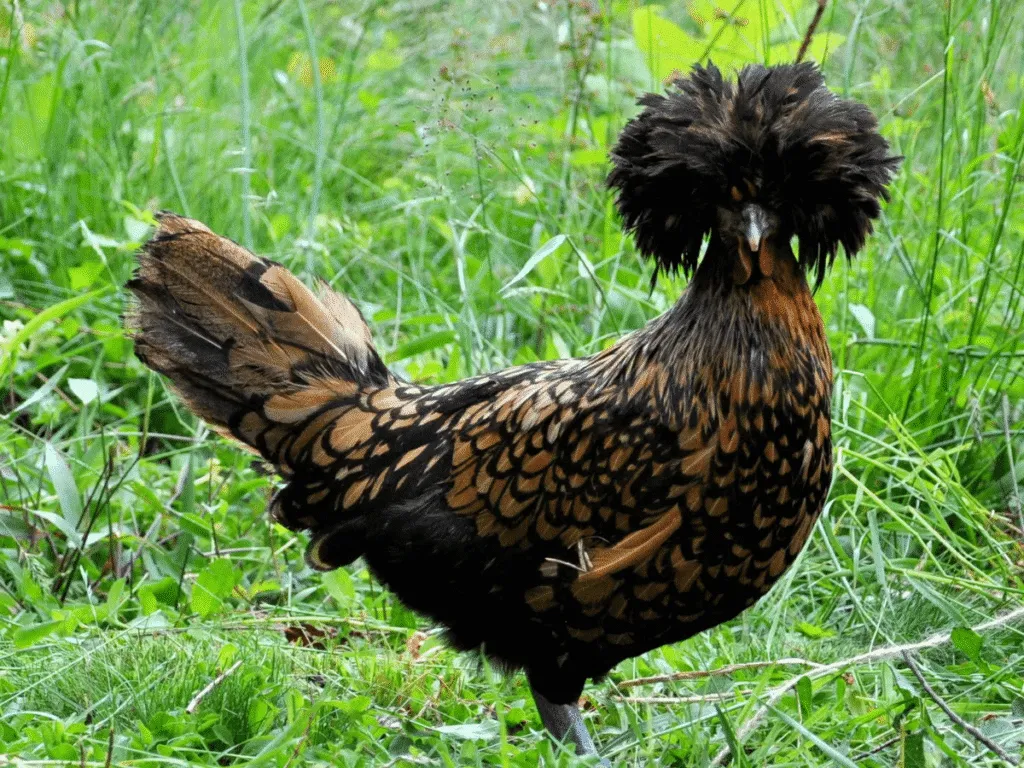
Gold Laced Polish Chickens
Gold laced polish chickens display stunning golden feathers with black lacing—each feather edged in black, creating a intricate, patterned appearance. They’re absolutely gorgeous and highly sought-after for exhibition.
Size: Same as White Crested Black—roosters 5–6 lbs, hens 4–5 lbs
Temperament: Same docile, flighty nature.
Purpose: Exhibition excellence; color collectors; ornamental display.
Egg Production: 120–180 small to medium white eggs annually.
Care Requirements: Standard Polish care with attention to crest maintenance.
Climate Adaptability: Moderate cold hardiness.
Buyer Suitability: Exhibition breeders; serious color collectors.
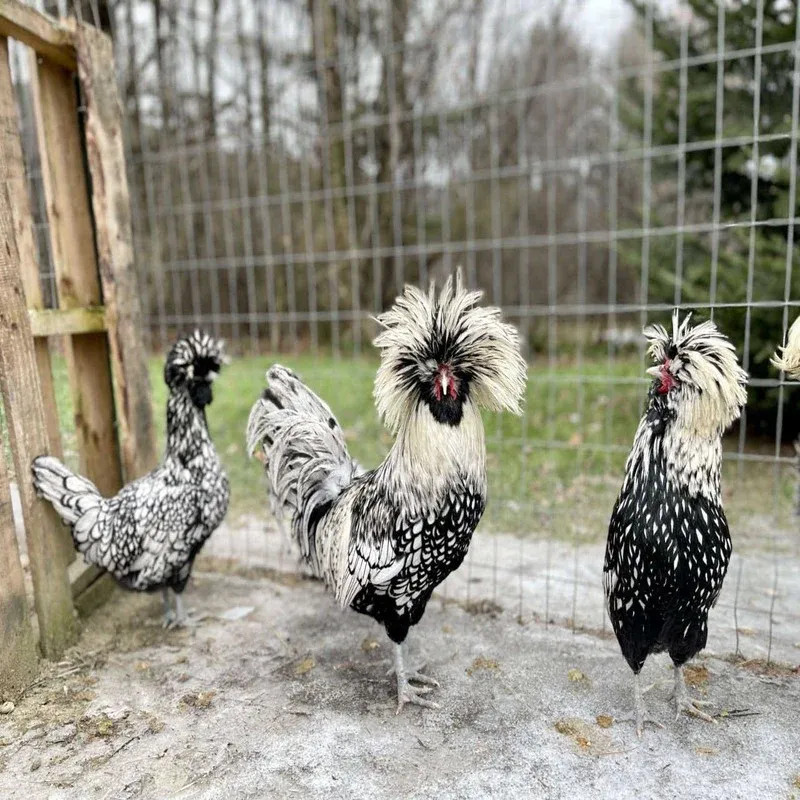
Silver Laced Polish Chickens
Silver laced polish chickens display crisp white/silver feathers with black lacing—a high-contrast pattern that’s absolutely stunning. The silver base with black edging creates a dramatic, elegant appearance.
Size: Same as others.
Temperament: Same docile, flighty nature.
Purpose: Exhibition excellence; rare color collectors.
Egg Production: 120–180 small to medium white eggs annually.
Care Requirements: White feathers need extra cleanliness; same crest care.
Climate Adaptability: Moderate cold hardiness; white reflects heat well.
Buyer Suitability: Exhibition breeders; serious collectors.
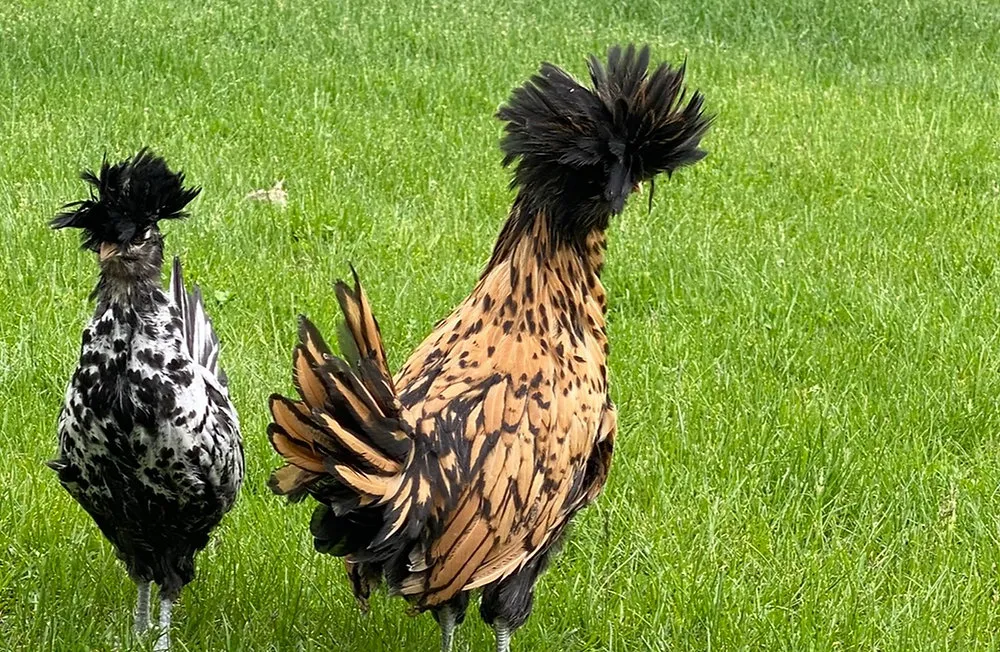
Buff Laced Polish Chickens
Buff laced polish chickens display warm golden-buff feathers with cream or white lacing—a softer, more subtle pattern than the gold or silver laced. This variety is relatively rare and absolutely beautiful.
Size: Same as others.
Temperament: Same docile, flighty nature.
Purpose: Rare color collectors; exhibition.
Egg Production: 120–180 small to medium white eggs annually.
Care Requirements: Standard Polish care.
Climate Adaptability: Moderate cold hardiness.
Buyer Suitability: Serious color collectors; those wanting something unique.
Tolbunt Polish Chickens
Description: Tolbunt polish chickens display a tricolor pattern of black, white, and buff—each feather shows all three colors in a beautiful, intricate pattern. This is one of the rarest and most sought-after Polish varieties. The name “Tolbunt” comes from “tricolor” and “bunt” (meaning colorful).
Size: Same as others.
Temperament: Same docile, flighty nature.
Purpose: Ultimate collector’s item; exhibition excellence.
Egg Production: 120–180 small to medium white eggs annually.
Care Requirements: Standard Polish care; their rare color warrants extra attention.
Climate Adaptability: Moderate cold hardiness.
Buyer Suitability: Serious collectors; exhibition breeders; those wanting the rarest Polish variety.
Frizzle Polish Chickens
Frizzle polish chickens combine the magnificent crest of Polish birds with the frizzle gene, causing their feathers to curl outward rather than lying flat. This creates an even more dramatic, fluffy appearance—like a living feather duster with a pom-pom on top. Available in all colors: White Crested Black Frizzle, Gold Laced Frizzle, Tolbunt Frizzle, etc.
Size: Same as smooth-feathered Polish.
Temperament: Same docile, flighty nature; often even more eye-catching.
Purpose: Exhibition showstoppers; collector’s items; breeding programs for frizzle genetics.
Care Requirements: Frizzled feathers require extra protection—they’re more susceptible to damage and less waterproof. Crest care is even more critical.
Climate Adaptability: Less cold-hardy than smooth-feathered varieties due to reduced insulation; require extra winter protection and draft-free housing.
Buyer Suitability: Serious collectors; exhibition enthusiasts; those wanting the ultimate “fluffy” chicken experience.
White Crested Blue Polish Chickens
Description: White crested blue polish chickens display slate-blue bodies with a pure white crest—a softer, dreamier version of the classic black-and-white combination. This variety is stunning and relatively rare.
Size: Same as others.
Temperament: Same docile, flighty nature.
Purpose: Color collectors; exhibition.
Egg Production: 120–180 small to medium white eggs annually.
Care Requirements: Standard Polish care.
Climate Adaptability: Moderate cold hardiness.
Buyer Suitability: Color collectors; those wanting something different.
White Polish Chickens
Description: White polish chickens display pure white plumage throughout, including the crest—a clean, elegant, all-white appearance. They’re striking in their simplicity.
Size: Same as others.
Temperament: Same docile, flighty nature.
Purpose: Ornamental display; exhibition.
Egg Production: 120–180 small to medium white eggs annually.
Care Requirements: White feathers need extra cleanliness.
Climate Adaptability: Moderate cold hardiness; white reflects heat well.
Buyer Suitability: Those wanting clean, bright birds.
Black Polish Chickens
Description: Black polish chickens display solid black plumage throughout, including the crest—a dramatic, all-black appearance with the signature pom-pom.
Size: Same as others.
Temperament: Same docile, flighty nature.
Purpose: Color collectors; exhibition.
Egg Production: 120–180 small to medium white eggs annually.
Care Requirements: Standard Polish care; black feathers absorb heat—provide shade.
Climate Adaptability: Moderate cold hardiness; black color advantage in winter.
Buyer Suitability: Color collectors.
Blue Polish Chickens
Blue polish chickens display solid slate-blue plumage throughout—a soft, dreamy color that’s relatively rare. The blue can range from light to dark.
Size: Same as others.
Temperament: Same docile, flighty nature.
Purpose: Color collectors; exhibition.
Egg Production: 120–180 small to medium white eggs annually.
Care Requirements: Standard Polish care.
Climate Adaptability: Moderate cold hardiness.
Buyer Suitability: Color collectors.
Splash Polish Chickens
Splash polish chickens display an irregular pattern of light blue-gray feathers with darker splashes—a “paint-splatter” effect that’s unique and beautiful. They result from breeding blue-to-blue (25% splash offspring).
Size: Same as others.
Temperament: Same docile, flighty nature.
Purpose: Rare color collectors; breeding programs.
Egg Production: 120–180 small to medium white eggs annually.
Care Requirements: Standard Polish care.
Climate Adaptability: Moderate cold hardiness.
Buyer Suitability: Collectors seeking unique patterns; breeders working with blue genetics.
Bearded vs. Non-Bearded Polish
Bearded Polish: Have a muff of feathers under the beak, adding to their fluffy appearance. The beard merges with the crest, creating an even more dramatic look. Available in all colors.
Non-Bearded Polish: Have a clean face with only the crest—the original style. The V-shaped comb is more visible.
Our breeding program includes both bearded and non-bearded varieties.
Polish Bantams
Description: Miniature versions of standard Polish, weighing 24–30 ounces for hens, 26–32 ounces for roosters. Available in all color varieties: White Crested Black, Gold Laced, Tolbunt, Frizzle, etc.
Temperament: Often even more personable than standards; their small size makes them excellent pets.
Purpose: Ornamental companions; small-scale egg production; exhibition.
Egg Production: 100–140 small white eggs annually.
Care Requirements: Same care principles scaled down; more vulnerable to predators; crest care still essential.
Climate Adaptability: Need extra winter protection due to size.
Buyer Suitability: Those with limited space; families with children; collectors.
Polish Chicken Colors Comparison
| Variety | Body Color | Crest Color | Rarity |
|---|---|---|---|
| White Crested Black | Black | White | Common |
| Gold Laced | Gold with black lacing | Gold/black | Moderate |
| Silver Laced | Silver with black lacing | Silver/black | Rare |
| Buff Laced | Buff with cream lacing | Buff/cream | Rare |
| Tolbunt | Black/white/buff tricolor | Tricolor | Very Rare |
| Frizzle (any) | Any color | Any color | Rare |
| White Crested Blue | Blue | White | Rare |
| White | White | White | Common |
| Black | Black | Black | Moderate |
| Blue | Blue | Blue | Rare |
| Splash | Splash | Splash | Rare |
| Chamois | Cream/buff | Cream/buff | Very Rare |
| Cuckoo | Barred | Barred | Rare |
Polish Chicken Vision & Crest Management
The Vision Challenge
Polish chickens have a unique challenge: their magnificent crest often covers their eyes, severely impairing their vision. This affects their behavior and care needs:
-
Easily Startled: They can’t see approaching danger—they startle easily
-
Flighty: They run first, ask questions later (because they can’t see)
-
Vulnerable to Predators: Their poor vision makes them easy targets
-
Difficulty Finding Food/Water: May need help locating resources
-
Tendency to Bump into Things: Can injure themselves on obstacles
Crest Care Essentials
Daily:
-
Quick visual check—can they see? Part crest if necessary
-
Check for debris, food particles caught in feathers
Weekly:
-
Gently clean crest if soiled (damp cloth, gentle drying)
-
Check for mites around base of crest
-
Trim feathers around eyes if vision is severely impaired
Monthly:
-
Deep clean if needed (gentle shampoo, thorough drying)
-
Trim excessively long crest feathers
Never:
-
Cut too much—the crest is their signature feature
-
Use harsh chemicals near eyes
-
Leave crest wet—can lead to mold and skin issues
Managing Vision-Impaired Birds
-
Keep environment consistent—don’t move feeders/waterers frequently
-
Use shallow, wide dishes they can easily find
-
Provide clear paths—avoid obstacles in their favorite areas
-
Handle gently and calmly—speak before reaching for them
-
Protect from predators—their vision makes them especially vulnerable
-
Consider trimming if vision is severely impaired (for their safety)
Polish Chicken Egg Production
Annual Production by Variety
| Variety | Annual Eggs | Egg Color | Start Laying | Notes |
|---|---|---|---|---|
| All Standard Polish | 120–180 | White | 6–7 months | Ornamental, not production |
| Polish Bantams | 100–140 | White | 6–7 months | Smaller eggs |
Egg Production Facts
-
Polish are ornamental birds—not bred for high egg production
-
They lay small to medium white eggs
-
Pullets start later than production breeds (6–7 months)
-
They rarely go broody (non-sitters)
-
Eggs are perfectly fine for eating—same as any chicken egg
Factors Affecting Egg Production
-
Light: 14–16 hours of daylight for maximum production
-
Nutrition: 16% protein layer feed with calcium supplementation
-
Stress: Their flighty nature means they’re easily stressed—minimize changes
-
Age: Peak years 1–3, then gradual decline
Polish Chicken Temperament: Docile but Flighty
The Polish Personality
Polish chickens have a unique personality that combines gentleness with nervousness:
-
Docile and Gentle: They’re not aggressive and rarely cause trouble
-
Flighty and Easily Startled: Their poor vision makes them nervous
-
Curious but Cautious: They’ll investigate but flee at sudden movements
-
Good with Other Docile Breeds: They do well with Silkies, Cochins, Orpingtons
-
Not Cuddly: They tolerate handling but don’t seek it out
-
Can Become Tamer: Regular gentle handling from chick stage helps
Managing Flighty Behavior
-
Speak softly before approaching
-
Move slowly and predictably
-
Avoid sudden movements or loud noises
-
Handle regularly from chick stage
-
Provide hiding spots in their environment
-
Keep routine consistent—they thrive on predictability
Polish vs. Other Docile Breeds
| Breed | Friendliness | Handling | Flightiness | Crest Care |
|---|---|---|---|---|
| Polish | Gentle | Tolerate | High | Essential |
| Silkie | Very Friendly | Love it | Low | Minimal |
| Cochin | Friendly | Enjoy | Low | None |
| Orpington | Very Friendly | Love it | Low | None |
| Houdan | Gentle | Tolerate | Moderate | Similar |
Polish Chicken Size & Appearance
Standard Polish Weights
| Age | Hen | Rooster |
|---|---|---|
| Day-old | 1 oz | 1 oz |
| 8 weeks | 1.5–2 lbs | 2–2.5 lbs |
| 16 weeks | 3–4 lbs | 4–5 lbs |
| Mature | 4–5 lbs | 5–6 lbs |
Bantam Polish Weights
| Age | Hen | Rooster |
|---|---|---|
| Day-old | 0.5 oz | 0.5 oz |
| 8 weeks | 10–12 oz | 12–14 oz |
| 16 weeks | 20–24 oz | 24–28 oz |
| Mature | 24–30 oz | 26–32 oz |
Physical Characteristics
-
Head: Covered by large, round crest of feathers
-
Comb: Small V-shaped (horn) comb, often hidden
-
Earlobes: White (indicating white eggs)
-
Skin: White
-
Legs: Slate blue or dark in dark varieties; lighter in white varieties
-
Beard: Present in bearded varieties (feathers under beak)
APA Recognized Varieties
-
Non-bearded: White Crested Black, White Crested Blue, White, Black, Buff Laced, Silver Laced, Golden Laced
-
Bearded: Same colors, plus Tolbunt (in development)
Polish Chicken vs. Other Crested Breeds
| Breed | Crest Size | Beard | Leg Feathering | Comb Type |
|---|---|---|---|---|
| Polish | Large, round | Optional | None | V-shaped |
| Houdan | Large | Yes | Yes | V-shaped |
| Crevecoeur | Large | Yes | None | V-shaped |
| La Fleche | Small crest | No | None | V-shaped |
| Silkie | Pom-pom | Yes | Yes (feathered) | Walnut |
| Sultan | Large | Yes | Yes | V-shaped |
Polish are distinguished by their large, round crest without leg feathering (except in rare instances).
Polish Chicken History
The Name Confusion
Despite the name, Polish chickens did NOT originate in Poland. They likely developed in the Netherlands, with the name coming from the Dutch word “Pol” meaning “head” — referring to their prominent crest. They were refined in Holland and France before spreading throughout Europe.
Royal Connections
Polish chickens were favorites among European nobility and appear in 16th-century Dutch paintings. They were prized for their ornamental value and unique appearance.
American Introduction
Polish chickens were included in the first American Poultry Association Standard of Perfection in 1874, making them one of the oldest recognized breeds in the US.
Why Choose OrderExoticPoultry.com
Health Guarantees
Every Polish chicken ships with our comprehensive 48-hour health guarantee. We personally inspect each bird before shipping and stand behind their condition upon arrival.
NPIP Compliance
Our breeding facilities maintain active National Poultry Improvement Plan certification (NPIP #XX-XXXX), ensuring your birds come from pullorum-typhoid clean stock. We provide official documentation with every shipment.
Rare Color Selection
We offer the widest selection of Polish colors available—White Crested Black, Gold Laced, Silver Laced, Buff Laced, Tolbunt, Frizzle, White, Black, Blue, Splash, and more, plus bearded and bantam versions.
Ethical Breeding Standards
We maintain separate breeding programs for each color variety, preserving genetic integrity and selecting for correct type and temperament.
Live Arrival Guarantee
We guarantee live delivery of all poultry shipments to all 50 states. Our shipping team coordinates with USPS, UPS, and specialized carriers to minimize transit time and maximize comfort.
U.S. Shipping Expertise
With thousands of successful shipments across all climates, we understand the logistics of safe poultry transport. We monitor weather patterns nationwide and delay shipments when conditions threaten bird safety.
Transparency & Trust Signals
-
Open farm visits by appointment
-
Verified customer reviews from Polish buyers
-
Third-party health certifications
-
Detailed breeding records and lineage documentation
-
Member of American Poultry Association and Polish Breeders Club
-
Active participant in rare color conservation
Shipping & Delivery Across the U.S.
Safe Transport Methods
All Polish chicks ship in USDA-approved ventilated containers designed specifically for live poultry transport. Day-old chicks receive hydrated gel packs for moisture during transit; started birds ship in divided compartments preventing injury. We include heat packs in cold weather and cooling elements in summer.
What Customers Receive
-
Healthy, inspected Polish matching your exact color order
-
NPIP certification documentation with flock ID
-
Detailed feeding and care transition instructions
-
Crest care guide (essential for Polish!)
-
Breed information card with color expectations
-
Contact information for post-arrival support
-
Discount code for future orders
Timeline Expectations
-
Day-old chicks: Ship Monday–Wednesday via priority mail; arrive within 2–3 days
-
Started pullets (8–16 weeks): Scheduled shipments based on weather; typically 1–3 day transit
-
Adult birds and breeding pairs: Custom shipping; 1–2 day express delivery
-
Hatching eggs: Weekly shipments with tracking and insurance
Buyer Reassurance
We monitor weather conditions nationwide and delay shipments when temperatures threaten bird safety. Our shipping team contacts every buyer with tracking information and arrival preparation instructions.
Polish Chicken Care Guide
Housing Requirements
Space Needs:
-
Standard Polish: 3–4 square feet per bird inside coop, 8–10 square feet per bird in runs
-
Bantam Polish: 2–3 square feet per bird inside, 6–8 square feet per bird in runs
-
For 6 standard Polish: 18–24 sq ft coop, 48–60 sq ft run minimum
Special Considerations for Vision-Impaired Birds:
-
Keep feeders and waterers in consistent locations
-
Provide clear paths—avoid obstacles
-
Use wide, shallow dishes they can easily find
-
Consider separate feeding area if with more aggressive breeds
Coop Specifications:
-
Roosting bars: 8–10 inches per bird; lower height (2–3 feet) to prevent injury from falling
-
Nest boxes: One per 4–5 hens; 12×12×12 inches
-
Ventilation: Good airflow, no drafts
-
Bedding: Pine shavings, hemp, or straw—keep clean to prevent crest soiling
Run Requirements:
-
Fencing: 4–5 foot minimum; they’re moderate fliers
-
Predator protection: EXTRA important due to poor vision—hardware cloth, buried fencing
-
Cover: Provide hiding spots for security
-
Dust baths: Essential—they’ll use them enthusiastically
Crest Care Protocol
Essential Daily Care:
-
Visual check: Ensure they can see—part feathers if necessary
-
Cleanliness check: Look for food, debris caught in crest
-
Moisture check: Crest should be dry (wet crests can lead to issues)
Weekly Care:
-
Gentle cleaning: Damp cloth to remove debris if needed
-
Mite check: Examine base of crest for parasites
-
Vision assessment: Trim around eyes if vision is impaired
Monthly/As Needed:
-
Deep cleaning: Gentle shampoo if heavily soiled—dry thoroughly!
-
Trimming: Carefully trim excessively long feathers (never cut too much)
Winter Care:
-
Crest can collect snow and ice—provide dry shelter
-
Check for frozen moisture on feathers
-
Bring birds inside during extreme weather if necessary
Feeding Protocol
Age-Appropriate Nutrition:
| Age | Feed Type | Protein % | Notes |
|---|---|---|---|
| 0–8 weeks | Chick starter | 20–22% | Crumbles; medicated optional |
| 8–20 weeks | Grower feed | 16–18% | Transition gradually |
| 20+ weeks | Layer feed | 16% | Pellets or crumbles; calcium for shells |
| All ages | Grit | Free-choice | For digestion |
| Layers only | Oyster shell | Free-choice | Separate from feed |
Feeding Tips for Vision-Impaired Birds:
-
Use shallow, wide dishes they can easily find
-
Keep feeders in consistent locations
-
Consider separate feeding area if with more aggressive breeds
-
Ensure they’re getting enough—watch for weight loss
Supplemental Foods:
-
Greens: Chopped lettuce, kale, spinach (easy to find)
-
Vegetables: Finely chopped carrots, squash, pumpkin
-
Protein: Small mealworms (treats)
-
Scratch grains: Limited (10% of diet)
Water Requirements:
-
Fresh, clean water daily
-
Heated waterers in freezing conditions
-
Wide, shallow containers preferred
-
Clean waterers weekly
Health Management
Common Health Issues:
-
Eye problems: From crest rubbing or debris—keep crest clean
-
Mites: Can hide at base of crest—check regularly
-
Respiratory infections: Ensure good ventilation
-
Injuries: From bumping into things due to poor vision—keep environment clear
-
Stress-related issues: Their flighty nature makes them prone to stress
-
Frostbite: On crest in winter—provide dry, draft-free housing
Preventive Care:
-
Weekly health inspections including crest
-
Clean coop monthly with deep clean quarterly
-
Dust bath areas (diatomaceous earth mixed with sand/soil)
-
Quarantine new birds 30 days
-
Trim crest if vision is severely impaired
Signs of Healthy Polish:
-
Bright, alert (though they may appear startled!)
-
Clean, fluffy crest
-
Active foraging behavior
-
Regular egg production
-
Clear nostrils
-
Good appetite
Breeding Management
Selecting Breeding Stock:
-
Choose birds with correct crest type and color
-
Ensure crest doesn’t completely blind them
-
Select for temperament (calmer individuals)
-
For bearded varieties, ensure proper beard development
Breeding Ratios:
-
Standard: 1 rooster per 8–10 hens
Color Genetics:
| Color | Genetics | Notes |
|---|---|---|
| White Crested Black | Specific pattern genes | Requires selection |
| Gold Laced | Complex | Needs careful pairing |
| Tolbunt | Tricolor recessive | Very complex |
| Blue | Incomplete dominant | Blue x Blue = 50% Blue, 25% Black, 25% Splash |
| Frizzle | Dominant | Frizzle x Frizzle = 50% Frizzle, 25% Smooth, 25% Over-frizzled |
Incubation Guidelines:
-
Fertility check: 7–10 days after introducing rooster
-
Incubation period: 21 days
-
Temperature: 99.5°F (forced air)
-
Humidity: 45–50% days 1–18, 65–70% days 19–21
-
Turn eggs 3–5 times daily
Chick Management:
-
Crest development begins within weeks
-
Sexing is challenging—crest size not reliable
-
By 8–12 weeks, males develop larger combs (if visible)
-
Handle regularly to tame their flighty nature
Seasonal Management
Spring:
-
Breeding season begins
-
Increase protein slightly
-
Prepare for chick season
-
Deep clean coops after winter
Summer:
-
Provide shade and ventilation
-
Frozen treats, multiple water stations
-
Watch for heat stress—their crest adds insulation
-
Ensure crest stays dry in rain—provide covered areas
Fall:
-
Annual molt (feather loss and regrowth)
-
Increase protein during molt (20–22%)
-
Prepare coops for winter
-
Deep clean before winter
Winter:
-
Critical crest care—dry housing essential
-
Heated waterers
-
Deep litter method for warmth
-
Check crest for ice formation
-
Limit outdoor time in extreme conditions
-
Their vision issues are compounded by snow
FAQ Section: Polish Chickens
General Questions
Q: What is a polish chicken?
A: A Polish chicken is a European crested breed known for its spectacular head crest of feathers. Despite the name, they originated in the Netherlands. They’re medium-sized (4–6 lbs), lay white eggs, and are primarily ornamental. They come in many colors including White Crested Black, Gold Laced, Silver Laced, and Tolbunt.
Q: What color eggs do polish chickens lay?
A: Polish chickens lay small to medium white eggs. Despite their fancy appearance, they lay standard white eggs—not colored. Egg production is 120–180 eggs per year.
Q: How many eggs do polish chickens lay?
A: Polish hens lay approximately 120–180 white eggs annually. They’re ornamental birds, not bred for high production. Bantam Polish lay 100–140 small white eggs per year.
Q: Are polish chickens friendly?
A: Polish chickens are gentle and docile but also flighty and easily startled due to their poor vision. They’re not aggressive and can become tame with regular gentle handling. They’re good with other docile breeds.
Q: How long do polish chickens live?
A: With proper care, Polish chickens live 5–8 years on average. Their crest requires ongoing maintenance throughout their lives. Egg production declines after 2–3 years.
Q: Can polish chickens see?
A: Polish chickens have normal eyesight, but their large crest often covers their eyes, severely impairing their vision. This is why they startle easily. Regular crest trimming around the eyes can improve vision.
Q: Are polish chickens cold hardy?
A: Polish chickens have moderate cold hardiness. Their crest can collect moisture and ice in winter, making them vulnerable to frostbite and chilling. Provide dry, draft-free housing and consider bringing them inside during extreme weather.
Q: What do polish chickens look like?
A: Polish chickens are best known for their large, round crest of feathers on their head, resembling a pom-pom or top hat. They have small V-shaped combs, white earlobes, and clean legs. They come in many colors and patterns.
Q: What colors do polish chickens come in?
A: Polish chickens come in a stunning array of colors including: White Crested Black, Gold Laced, Silver Laced, Buff Laced, Tolbunt, White, Black, Blue, Splash, Chamois, Cuckoo, and Frizzle versions of many colors.
Q: What is a tolbunt polish chicken?
A: A Tolbunt Polish is a rare tricolor variety displaying black, white, and buff on each feather. The name comes from “tricolor” and “bunt” (colorful). They’re among the most sought-after Polish varieties.
Q: What is a frizzle polish chicken?
A: A Frizzle Polish combines the signature crest with the frizzle gene, causing feathers to curl outward. This creates an even more dramatic, fluffy appearance. Available in all colors.
Q: What is the difference between bearded and non-bearded polish?
A: Bearded Polish have a muff of feathers under the beak, adding to their fluffy appearance. Non-bearded have clean faces with only the crest. Both are available in all colors.
Q: Are polish chickens good for beginners?
A: Polish chickens can be suitable for beginners who understand their special needs. Their vision impairment and flighty nature require patient handling and predator-proof housing. They’re not as hardy as some breeds.
Q: Do polish chickens go broody?
A: Rarely. Polish are non-sitters—they rarely go broody and are not reliable mothers. If you want to hatch Polish chicks, use an incubator or a broody hen of another breed.
Q: How to sex polish chickens?
A: Sexing Polish chickens is challenging. By 8–12 weeks, males develop larger combs and wattles (if visible through crest) and may show more upright carriage. Females often have rounder, fuller crests. Vent sexing at hatch is most reliable.
Care & Management
Q: What do polish chickens eat?
A: Feed age-appropriate complete poultry feeds: chick starter (0–8 weeks, 20–22% protein), grower (8–20 weeks, 16–18%), layer feed (20+ weeks, 16% with calcium). Provide free-choice grit and oyster shell.
Q: How much space do polish chickens need?
A: Standard Polish need 3–4 square feet per bird inside coop, 8–10 square feet per bird in run. For 6 Polish: 18–24 sq ft coop, 48–60 sq ft run minimum.
Q: How to care for polish chicken crest?
A: Check daily for debris, keep clean and dry, trim around eyes if vision impaired, protect from wet weather, and check for mites at base of crest. Never cut too much—the crest is their signature.
Q: When do polish chickens start laying?
A: Polish pullets typically begin laying at 6–7 months of age (24–28 weeks)—later than production breeds.
Q: Do polish chickens need a rooster to lay eggs?
A: No, hens lay eggs independently of roosters. A rooster is only needed for fertilized eggs for hatching.
Q: What kind of coop do polish chickens need?
A: Standard coops with 3–4 sq ft per bird, predator-proof construction, good ventilation, and consistent feeder/waterer placement. Their vision impairment means they need familiar surroundings.
Q: Can polish chickens live with other breeds?
A: Yes, with other docile breeds like Silkies, Cochins, Orpingtons. Avoid aggressive breeds that might bully them due to their poor vision.
Q: Do polish chickens fly?
A: Polish are moderate fliers—they can clear 4–5 foot fences. Their poor vision makes flying hazardous—they may crash. Clip wings or provide covered runs.
Purchasing & Breeding
Q: Where can I buy polish chickens?
A: OrderExoticPoultry.com offers NPIP-certified Polish chickens in White Crested Black, Gold Laced, Silver Laced, Buff Laced, Tolbunt, Frizzle, and many more colors, plus bearded and bantam versions. We ship nationwide with live arrival guarantees.
Q: How much do polish chickens cost?
A: Polish prices vary by color and quality. Common colors: $8–15 per chick. Rare colors (Tolbunt, Buff Laced, Silver Laced): $15–30 per chick. Frizzle: $15–30. Started pullets: $25–50. Breeding pairs: $75–200+ depending on color and quality. Show-quality birds: $200–500+.
Q: What is the rarest polish chicken color?
A: Tolbunt is among the rarest, requiring complex tricolor genetics. Buff Laced and Silver Laced are also rare. Frizzle versions of rare colors are exceptionally rare.
Q: Are tolbunt polish chickens rare?
A: Yes, Tolbunt Polish are genuinely rare. The tricolor pattern is complex and difficult to breed consistently. Quality Tolbunt birds are highly sought-after.
Q: Can I breed polish chickens?
A: Yes, but color genetics can be complex. Tolbunt and laced patterns require careful selection. Their non-broody nature means you’ll need incubators or broody hens of other breeds.
Q: Where do polish chickens come from?
A: Despite the name, Polish chickens originated in the Netherlands. They were developed from crested breeds brought from Asia and refined in Holland and France.
Q: Are polish chickens a heritage breed?
A: Yes, Polish are a recognized heritage breed, included in the first American Poultry Association Standard of Perfection in 1874.
Add Crested “Top Hat” Beauties to Your Flock
Rare Color Selection: We offer the widest selection of Polish colors available—from classic White Crested Black to rare Tolbunt, stunning Gold Laced, and fluffy Frizzle.
Current Availability:
| Variety | Chicks | Started Pullets | Breeding Pairs | Notes |
|---|---|---|---|---|
| White Crested Black | ✓ Available | ✓ Available | ✓ Available | The classic beauty |
| Gold Laced Polish | Limited | Contact | Limited | Stunning lacing |
| Silver Laced Polish | Rare | Contact | Contact | Crisp elegance |
| Buff Laced Polish | Rare | Contact | Contact | Soft warm tones |
| Tolbunt Polish | Very Rare | Contact | Contact | Tricolor rarity |
| Frizzle Polish (various) | Limited | Contact | Contact | Ultimate fluff |
| White Polish | ✓ Available | Limited | ✓ Available | Pure elegance |
| Blue Polish | Limited | Contact | Contact | Soft slate |
| Splash Polish | Limited | Contact | Contact | Unique pattern |
| Polish Bantams | Limited | Contact | Contact | Miniature versions |
Secure Your Polish Today:
-
Browse available varieties and select your colors
-
Choose quantity and age (day-old chicks, started pullets, breeding pairs)
-
Place your deposit to secure your place in our hatching schedule
-
Receive confirmation and estimated shipment date
-
Prepare for crest care—these beauties need special attention
Breeder Programs:
Developing a color breeding program? We offer:
-
Wholesale pricing on breeding trios and flocks
-
Color genetics consultation for specific outcomes
-
Crest type selection guidance
-
Lineage documentation and breeding records
-
Ongoing breeder support and community access
Early Reservations Essential
Rare colors (Tolbunt, Buff Laced, Silver Laced, Frizzle) are produced in limited numbers each season. Contact us to reserve your birds today.
ORDER POLISH CHICKENS NOW
NPIP Certified • Live Arrival Guaranteed • Rare Color Varieties • Crested Beauties • Nationwide Shipping
Why Choose Us for Your Polish?
-
All major varieties—White Crested Black, Gold Laced, Silver Laced, Buff Laced, Tolbunt, Frizzle, and more
-
Bearded and non-bearded options
-
Bantam versions of most colors
-
Documented breeding programs for color purity
-
Health-guaranteed, NPIP-certified birds
-
Expert shipping with live arrival guarantee
-
Ongoing support from Polish specialists
| Quantity | 1 Pair, 5 Pairs, 10 Pairs |
|---|---|
| Chicken Color | Bantam, Silver Laced, Golden Laced, Buff, Blue |
Be the first to review “Polish Chickens for Sale”
Related products
Exotic Chicken Breeds
Exotic Chicken Breeds
Exotic Chicken Breeds
Exotic Chicken Breeds
Exotic Chicken Breeds
Exotic Chicken Breeds
Exotic Chicken Breeds
Exotic Chicken Breeds
Reviews
There are no reviews yet.