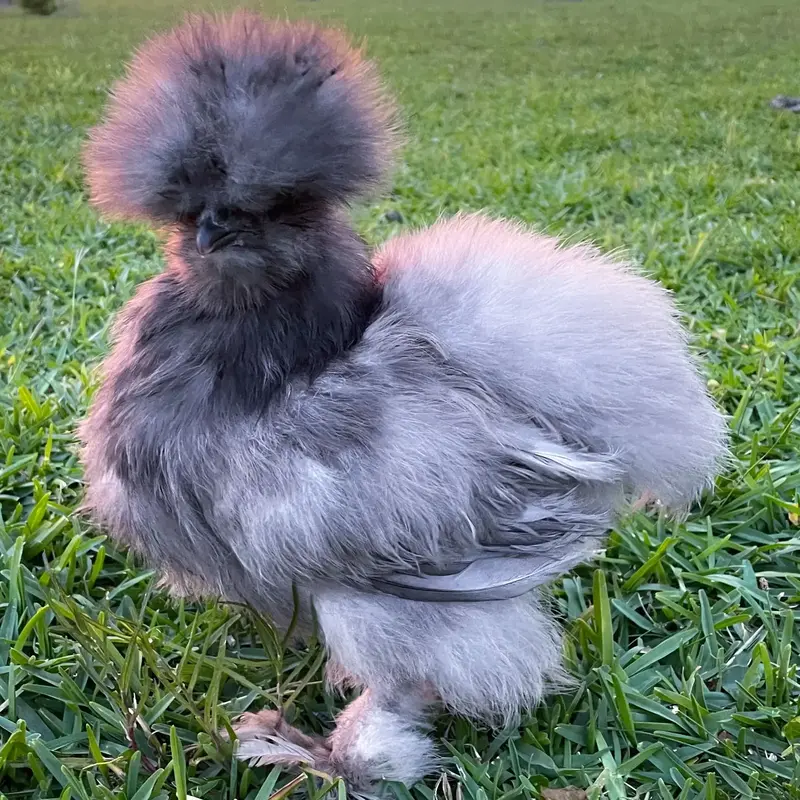
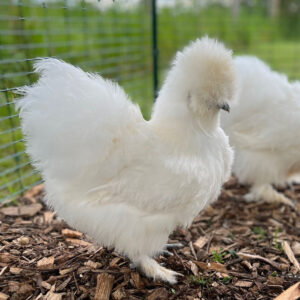
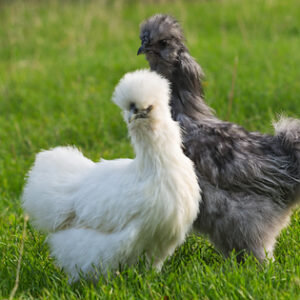
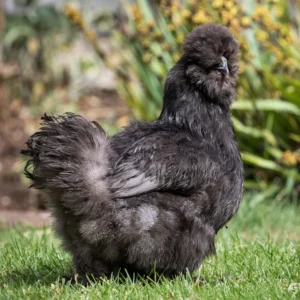
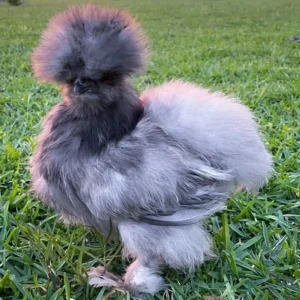
Silkie Chickens for Sale
Price range: $45.00 through $50.00
Looking for a fluffy, friendly addition to your flock? Our Silkies are the ultimate lap chickens! These gentle, docile birds are famous for their soft, fur-like feathers, black skin, and five-toed feet . They’re calm, curious, and absolutely adore attention—perfect for families with kids or first-time owners. They lay small cream eggs (100-120/year) and make the best broody mamas for hatching other eggs
Silkie Chickens For Sale: Fluffy, Friendly “Teddy Bear” Chickens in Stunning Colors
Silkie chickens are the undisputed rock stars of the poultry world—with their fluffy, fur-like feathers; gentle dispositions; and unmistakable appearance, they capture hearts wherever they go. Originating in ancient China, these “teddy bear” chickens have been beloved for centuries, not only as ornamental curiosities but also as devoted mothers, gentle pets, and even gourmet delicacies in some cultures. At OrderExoticPoultry.com, we offer NPIP-certified, health-guaranteed silkie chickens for sale in the widest color selection available anywhere in the United States—from classic black and white to rare lavender, stunning splash, and fluffy frizzle. Whether you’re seeking a cuddly companion, a reliable broody hen to hatch eggs, or a show-stopping addition to your exhibition flock, our Silkies represent the finest of this ancient and endearing breed.
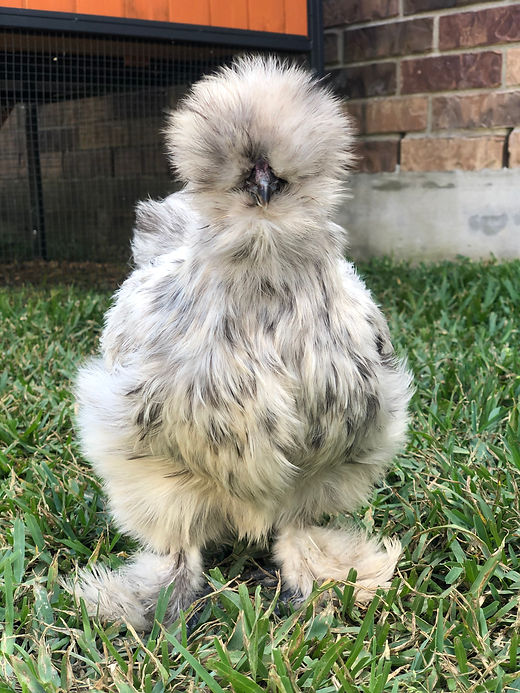
What Are Silkie Chickens?
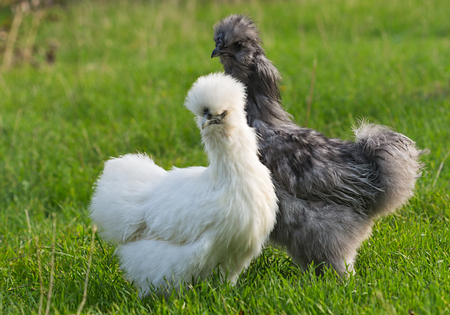
Silkie chickens are a unique breed of bantam (or sometimes standard-sized) chicken originating in ancient China, prized for their soft, fluffy plumage that feels like silk or fur. Unlike typical chickens, Silkie feathers lack barbicels, giving them a downy appearance. They have black skin, black or dark blue bones, five toes (most chickens have four), and turquoise-blue earlobes. They are calm, docile, and famously broody, making them exceptional mothers. They weigh 2–3 pounds (bantam) or 4–5 pounds (rare large fowl), lay 100–120 small cream/tinted eggs per year, and come in a rainbow of colors.
Silkie Varieties & Colors We Offer
Black Silkie Chickens
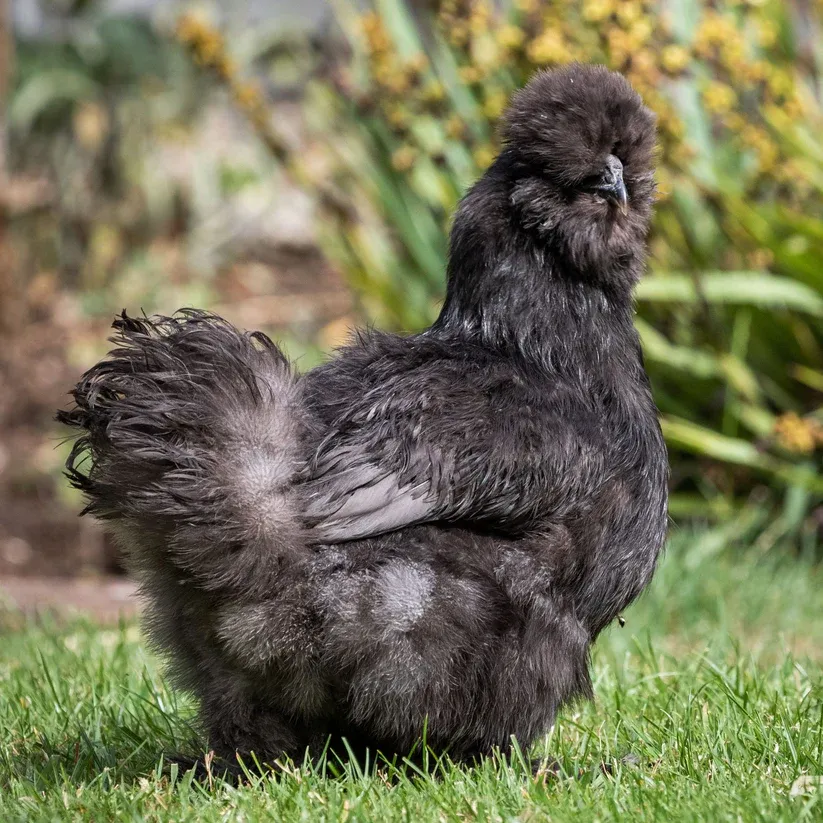
The classic and most recognizable variety, black Silkie chickens, display deep, uniform black plumage, skin, and bones. Their feathers have a striking blue-black sheen, and their turquoise earlobes provide a beautiful contrast.
Size:
-
Bantam: Roosters 2–2.5 lbs, hens 1.5–2 lbs
-
Large Fowl (rare): Roosters 4–5 lbs, hens 3–4 lbs
Temperament: Exceptionally calm, friendly, and docile. Black Silkies are gentle, love being held, and are ideal for families with children.
Purpose: Ornamental pets; broody mothers for hatching eggs; exhibition.
Egg Production: 100–120 small cream/tinted eggs annually. They are reliable layers for a bantam breed and often go broody, pausing laying to set eggs.
Care Requirements: Need protection from predators (poor flyers), clean bedding to keep fluffy feathers pristine, and occasional bathing if feathers become soiled.
Climate Adaptability: Moderate cold hardiness; needs dry, draft-free shelter. Their fluffy feathers can matt with snow/ice. Heat tolerant with shade and water.
Buyer Suitability: Perfect for families, children, first-time chicken keepers, and anyone wanting a friendly, unique pet.
White Silkie Chickens
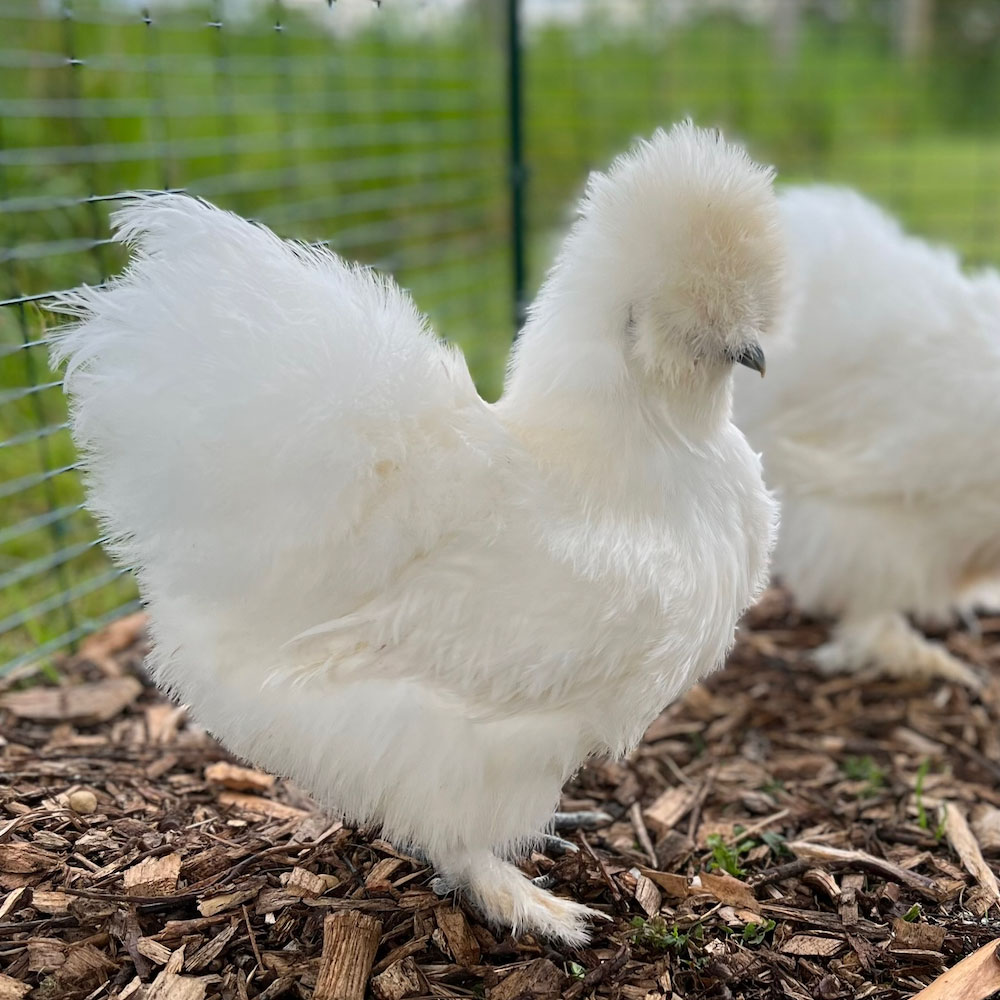
Pure white plumage throughout, with the same black skin, five toes, and blue earlobes. White Silkies are elegant and sought-after for their clean, bright appearance.
Temperament: Same gentle, docile nature.
Purpose: Ornamental; exhibition; broody hens.
Egg Production: 100–120 cream eggs.
Care Requirements: White feathers show dirt easily—they need a clean environment and occasional gentle bathing.
Buyer Suitability: Those preferring clean, bright birds; exhibition enthusiasts.
Blue Silkie Chickens
Blue silkie chickens display soft slate-blue plumage ranging from light to dark. The blue color is a dilution of black and follows classic blue genetics. Blue Silkies are rare and highly sought-after.
Temperament: Same docile nature.
Purpose: Color collectors and exhibition.
Egg Production: 100–120 cream eggs.
Care Requirements: Standard Silkie care.
Buyer Suitability: Color collectors and those wanting something unique.
Buff Silkie Chickens
Warm golden-buff plumage—a soft, uniform color that’s beautiful and relatively rare. Buff Silkies have the same black skin and blue ears, creating a lovely contrast.
Temperament: Same gentle nature.
Purpose: Color collectors and ornamental.
Egg Production: 100–120 cream eggs.
Care Requirements: Standard care.
Buyer Suitability: Color enthusiasts.
Splash Silkie Chickens
Splash Silkie chickens have an irregular pattern of light blue-gray feathers with darker splashes—a “paint-splatter” effect. They result from breeding blue-to-blue (25% splash offspring) and are unique and eye-catching.
Temperament: Same docile nature.
Purpose: Rare color collectors; breeding programs.
Egg Production: 100–120 cream eggs.
Care Requirements: Standard care.
Buyer Suitability: Collectors seeking unique patterns.
Lavender Silkie Chickens
Lavender Silkie chickens display a soft, uniform silver-blue (self-blue) color—not to be confused with blue. Lavender is a recessive gene that produces a consistent pale lavender shade. This is one of the rarest and most coveted Silkie colors.
Temperament: Same gentle nature.
Purpose: Ultimate collector’s item; exhibition.
Egg Production: 100–120 cream eggs.
Care Requirements: Standard care.
Buyer Suitability: Serious collectors willing to invest.
Partridge Silkie Chickens
Description: Partridge Silkie chickens have intricate patterning—hens display rich, golden-brown feathers with multiple black penciling; roosters are even more dramatic with black breasts and golden hackles. This variety is absolutely stunning and rare.
Temperament: Same docile nature.
Purpose: Exhibition excellence; color collectors.
Egg Production: 100–120 cream eggs.
Care Requirements: Standard care.
Buyer Suitability: Exhibition breeders; serious collectors.
Chocolate Silkie Chickens
Description: Chocolate silkie chickens have rich, warm brown plumage—a relatively new and rare color mutation. They are highly sought-after by collectors.
Temperament: Same gentle nature.
Purpose: Rare color collectors.
Egg Production: 100–120 cream eggs.
Care Requirements: Standard care.
Buyer Suitability: Serious collectors.
Cuckoo Silkie Chickens
Description: Cuckoo Silkie chickens display barred patterns of light and dark—like a cuckoo bird. This pattern is rare in Silkies and highly prized.
Temperament: Same docile nature.
Purpose: Rare pattern collectors.
Egg Production: 100–120 cream eggs.
Care Requirements: Standard care.
Buyer Suitability: Pattern collectors.
Frizzle Silkie Chickens
Description: Frizzle Silkie chickens combine the Silkie’s fluffy feathers with the frizzle gene, causing feathers to curl outward instead of lying flat. This creates an even more dramatic, “bedhead” appearance. Frizzles are available in all colors.
Temperament: Same gentle nature; often even more eye-catching.
Purpose: Exhibition showstoppers; collector’s items.
Care Requirements: Frizzled feathers are more delicate and less waterproof—they need extra protection from rain and cold.
Climate Adaptability: Less cold-hardy than smooth silkies; need sheltered housing.
Buyer Suitability: Serious collectors; exhibition enthusiasts.
Showgirl Silkie Chickens
Description: Showgirl silkie chickens are a cross between a Silkie and a Naked Neck (Turken) chicken, resulting in a bird with Silkie fluff but a bare neck. They have a unique, striking appearance—fluffy body, naked neck, and sometimes a crest. They come in all Silkie colors.
Temperament: Same docile, friendly nature.
Purpose: Novelty collectors; exhibition.
Egg Production: 100–120 cream eggs.
Care Requirements: A bare neck needs protection from sunburn and cold—provide shade and winter shelter.
Climate Adaptability: Need extra care in extreme temperatures.
Buyer Suitability: Collectors wanting something truly unusual.
Bearded vs. Non-Bearded Silkies
Bearded Silkies: Have a muff of feathers under the beak, adding to their fluffy appearance. The beard merges with the crest, creating an even more adorable face. Most Silkies in the US are bearded.
Non-Bearded Silkies: Have clean faces without the beard—the original type, still seen in some lines.
Our breeding program includes both bearded and non-bearded varieties.
Silkie Bantams vs. Large Fowl
Bantam Silkies: The most common type, weighing 1.5–2.5 lbs. They’re the standard for exhibition and pets.
Large Fowl Silkies: Rare, weighing 3–5 lbs. They have the same characteristics but are larger. Very limited availability.
We offer primarily bantam Silkies, with occasional large fowl availability.
Why Choose Silkie Chickens?
The Perfect Pet
-
Docile and Friendly: Silkies are among the gentlest chicken breeds, often seeking human interaction.
-
Great with Children: Their calm nature makes them ideal family pets.
-
Quiet: They’re not noisy, suitable for suburban settings.
-
Cuddly: Their fluffy feathers invite petting; many enjoy being held.
Exceptional Mothers
-
Broody by Nature: Silkies are famously broody—they’ll sit on and hatch eggs of any breed, even duck or turkey eggs.
-
Devoted Moms: They are attentive, protective mothers, perfect for hatching your own chicks.
Ornamental Beauty
-
Stunning Colors: From classic black to rare lavender, there’s a Silkie for every aesthetic.
-
Unique Appearance: Five toes, black skin, blue ears—they’re truly one-of-a-kind.
-
Exhibition Quality: Show-quality Silkies compete in poultry shows worldwide.
Practical Benefits
-
Eggs: They lay 100–120 small, delicious cream eggs per year.
-
Meat: In some cultures, Silkie meat is considered a delicacy (black skin and bones).
-
Pest Control: They forage and eat insects, though less efficiently than larger breeds.
Silkie Egg Production
Annual Production
| Type | Annual Eggs | Egg Color | Start laying. | Broodiness |
|---|---|---|---|---|
| Bantam Silkie | 100–120 | Cream/tinted | 6–8 months | Very High |
| Large Fowl, Silkie | 100–120 | Cream/tinted | 6–8 months | High |
Egg Facts
-
Silkies lay small to medium eggs, perfect for snacking or baking.
-
Eggs are cream or lightly tinted—not white, not brown.
-
They lay in cycles, often pausing to go broody.
-
Broody hens make excellent mothers but stop laying during brooding.
Silkie Temperament: The Gentle Giants (of the Bantam World)
Silkies are renowned for their sweet, docile dispositions:
-
Calm and Friendly: They rarely show aggression and enjoy human company.
-
Curious but Not Flighty: They’ll explore but don’t panic easily.
-
Good with Other Breeds: They integrate well, but their small size and docility mean they may be bullied by more assertive breeds.
-
Excellent Pets: They bond with their keepers, often following them around.
-
Broody and Motherly: They’ll sit on eggs for weeks and raise chicks devotedly.
Managing Expectations
-
Handle them regularly from the chick stage to maintain tameness.
-
Protect them from bullying by larger chickens.
-
Their docility makes them vulnerable to predators—secure housing is essential.
Silkie Size & Appearance
Bantam Silkie Weights
| Age | Hen | Rooster |
|---|---|---|
| Day-old | 1 oz | 1 oz |
| 8 weeks | 12–14 oz | 14–16 oz |
| 16 weeks | 1.5–2 lbs | 2–2.5 lbs |
| Mature | 1.5–2 lbs | 2–2.5 lbs |
Large Fowl Silkie Weights (rare)
| Mature | 3–4 lbs | 4–5 lbs |
Physical Characteristics
-
Feathers: Fluffy, fur-like, lacking barbicels.
-
Skin: Black (deep blue-black).
-
Bones: Black or dark gray.
-
Earlobes: Turquoise-blue.
-
Toes: Five (most chickens have four).
-
Comb: Walnut-shaped, small, dark.
-
Legs: Feathered.
Silkie Care Guide
Housing
Space Needs:
-
Bantam Silkies: 2–3 square feet per bird inside coop, 6–8 square feet per bird in run.
-
Large Fowl: 3–4 sq ft inside, 8–10 sq ft in run.
Coop Considerations:
-
Predator Protection: Silkies are poor flyers and easy targets—use hardware cloth, not chicken wire.
-
Roosts: Low roosts (1–2 ft high) with wide perches; they may prefer floor sleeping.
-
Bedding: Keep clean and dry to prevent feather matting. Pine shavings or straw.
-
Ventilation: Good airflow, no drafts.
Run:
-
Covered to protect from aerial predators.
-
Provide shade and dust-bathing areas.
Grooming & Hygiene
Bathing: Silkies may need occasional baths if feathers become soiled.
-
Use warm water and gentle poultry shampoo.
-
Rinse thoroughly and dry completely (use a hairdryer on low) to prevent chilling.
-
Never let them stay wet—their feathers aren’t waterproof.
Trimming: Trim feathers around eyes if vision is impaired.
Check feet: Keep nails trimmed; check for scaly leg mites.
Feeding
| Age | Feed Type | Protein % | Notes |
|---|---|---|---|
| 0–8 weeks | Chick starter | 20–22% | Medicated optional |
| 8–20 weeks | Grower feed | 16–18% | Transition gradually |
| 20+ weeks | Layer feed | 16% | Pellets or crumbles |
| All ages | Grit | Free-choice | For digestion |
| Layers only | Oyster shell | Free-choice | For strong shells |
Treats: Offer greens, vegetables, and mealworms sparingly.
Water: Fresh daily; use shallow dishes to prevent drowning (they can tip over).
Health
Common Issues:
-
Mites/Lice: Check regularly, especially under feathers.
-
Respiratory infections: Ensure good ventilation.
-
Crop issues: Provide grit; avoid long grass/straw.
-
Egg binding: Ensure calcium and proper nutrition.
-
Feather problems: Keep clean and dry; treat external parasites promptly.
Preventive Care:
-
Regular health checks.
-
Clean coop monthly.
-
Quarantine new birds.
Winter Care
-
Silkies are moderately cold-hardy but need dry, draft-free shelter.
-
Their fluffy feathers can mat with snow/ice—provide covered runs.
-
Use the deep litter method for warmth.
-
Check for frostbite on toes and comb (rare due to the small comb).
Summer Care
-
Provide shade and ventilation.
-
Ensure constant water.
-
Frozen treats help cool them.
-
Their fluffy feathers can trap heat—watch for heat stress.
Silkie Sexing Guide
Sexing Silkies is notoriously difficult—here’s what to look for:
Day-old chicks: Virtually impossible; vent sexing by an expert is required.
By 6–8 weeks:
-
Males: May develop slightly larger combs and wattles; often stand taller.
-
Females: Smaller, more rounded.
By 12–16 weeks:
-
Males: Combs and wattles become more prominent; they begin crowing attempts.
-
Females: Remain smaller; may start laying later.
Adult:
-
Roosters: Larger size, larger walnut comb, streamers (long feathers) in the crest, may have pointed hackle feathers, and crow.
-
Hens: Smaller, no streamers, rounded appearance, may lay eggs.
Note: Some Silkies, especially in rare colors, may not show obvious differences until maturity.
Why Choose OrderExoticPoultry.com
Health Guarantees
Every Silkie chicken ships with our comprehensive 48-hour health guarantee. We personally inspect each bird before shipping and stand behind their condition upon arrival.
NPIP Compliance
Our breeding facilities maintain active National Poultry Improvement Plan certification (NPIP #XX-XXXX), ensuring your birds come from pullorum-typhoid-clean stock. We provide official documentation with every shipment—essential for interstate transport.
Rare Color Selection
We offer the widest selection of Silkie colors available—black, white, blue, buff, splash, lavender, partridge, chocolate, cuckoo, frizzle, showgirl, and more.
Ethical Breeding Standards
We maintain separate breeding programs for each color variety, preserving genetic integrity and selecting for health, temperament, and breed-typical characteristics.
Live Arrival Guarantee
We guarantee live delivery of all poultry shipments to all 50 states. Our shipping team coordinates with USPS, UPS, and specialized carriers to minimize transit time and maximize comfort.
U.S. Shipping Expertise
With thousands of successful shipments across all climates, we understand the logistics of safe poultry transport. We monitor weather patterns nationwide and delay shipments when conditions threaten bird safety.
Transparency & Trust Signals
-
Open farm visits by appointment
-
Verified customer reviews from Silkie buyers
-
Third-party health certifications available
-
Detailed breeding records and lineage documentation
-
Member of American Poultry Association and Silkie Breeders Club
-
Active participant in rare color conservation
Shipping & Delivery Across the U.S.
Safe Transport Methods
All Silkie chicks ship in USDA-approved ventilated containers designed specifically for live poultry transport. Day-old chicks receive hydrated gel packs for moisture during transit; started birds ship in divided compartments, preventing injury. We include heat packs in cold weather and cooling elements in summer.
What Customers Receive
-
Healthy, inspected Silkies matching your exact color order
-
NPIP certification documentation with flock ID
-
Detailed feeding and care transition instructions
-
Silkie grooming guide (essential for their unique feathers!)
-
Breed information card with color expectations
-
Contact information for post-arrival support
-
Discount code for future orders
Timeline Expectations
-
Day-old chicks: Ship Monday–Wednesday via priority mail; arrive within 2–3 days
-
Started pullets (8–16 weeks): Scheduled shipments based on weather; typically 1–3 day transit
-
Adult birds and breeding pairs: Custom shipping: 1–2 day express delivery
-
Hatching eggs: Weekly shipments with tracking and insurance
Buyer Reassurance
We monitor weather conditions nationwide and delay shipments when temperatures threaten bird safety. Our shipping team contacts every buyer with tracking information and arrival preparation instructions.
FAQ Section: Silkie Chickens
General Questions
Q: Do silkie chickens lay eggs?
A: Yes, Silkie hens lay 100–120 small cream/tinted eggs per year. They are good layers for a bantam breed, but they often go broody, which pauses egg production.
Q: What color eggs do silkie chickens lay?
A: Silkie eggs are cream or lightly tinted—not white or brown. They are smaller than standard chicken eggs but delicious and rich.
Q: How long do silkie chickens live?
A: With proper care, Silkies live 7–9 years on average. Some may reach 10+ years. Their lifespan is typical for bantam chickens.
Q: Are silkie chickens friendly?
A: Yes, Silkies are among the friendliest and most docile chicken breeds. They love human interaction, are great with children, and make wonderful pets.
Q: How many eggs do silkie chickens lay?
A: Silkie hens lay approximately 100–120 eggs per year, depending on individual, age, and season. They lay in cycles and often go broody.
Q: What colors do silkie chickens come in?
A: Silkies come in a stunning array of colors: black, white, blue, buff, splash, lavender, partridge, chocolate, cuckoo, red, and more. Frizzle and showgirl varieties add even more diversity.
Q: Are Silkie chickens cold hardy?
A: Silkies are moderately cold-hardy but need dry, draft-free shelter. Their fluffy feathers can mat with snow and ice, so covered runs are essential. They’re more sensitive to wet and cold than some breeds.
Q: Do silkie chickens have 5 toes?
A: Yes, Silkies are one of the few chicken breeds with five toes on each foot. Most chickens have four. This is a defining characteristic of the breed.
Q: Are silkie chickens good pets?
A: Absolutely! Silkies are renowned as excellent pets due to their calm, friendly temperament, small size, and adorable appearance. They’re great for families, children, and first-time chicken keepers.
Q: Can silkie chickens fly?
A: Silkies are poor fliers due to their fluffy feathers and heavy bodies. They can flutter short distances but cannot clear high fences. This makes them easier to contain but more vulnerable to predators.
Q: What do silkie chickens eat?
A: Feed age-appropriate poultry feed: starter (0–8 weeks), grower (8–20 weeks), and layer feed (20+ weeks). Supplement with greens, vegetables, and limited treats. Always provide grit and clean water.
Q: How to sex Silkie chickens?
A: Sexing Silkies is challenging. Males develop larger combs and wattles by 12–16 weeks, may have streamers in the crest, and eventually crow. Females remain smaller and may lay eggs. Vent sexing by an expert is most reliable.
Q: When do silkie chickens start laying?
A: Silkie pullets typically begin laying at 6–8 months of age (24–32 weeks). Factors like season and nutrition affect onset.
Q: Are silkie chickens good mothers?
A: Yes, Silkies are famously broody and make excellent mothers. They’ll hatch and raise chicks of any breed, even ducklings.
Add Fluffy, Friendly “Teddy Bear” Chickens to Your Flock
Rare Color Selection: We offer the widest selection of Silkie colors available—from classic black and white to rare lavender, stunning splash, and fluffy frizzle.
Current Availability:
| Variety | Chicks | Started Pullets | Breeding Pairs | Notes |
|---|---|---|---|---|
| Black Silkie | ✓ Available | ✓ Available | ✓ Available | Classic beauty |
| White Silkie | ✓ Available | ✓ Available | ✓ Available | Pure elegance |
| Blue Silkie | Limited | Contact | Limited | Stunning slate |
| Buff Silkie | Limited | Contact | Contact | Warm golden |
| Splash Silkie | Limited | Contact | Contact | Unique pattern |
| Lavender Silkie | Rare | Contact | Contact | Rare self-blue |
| Partridge Silkie | Rare | Contact | Contact | Intricate pattern |
| Chocolate Silkie | Very Rare | Contact | Contact | Rich brown |
| Cuckoo Silkie | Rare | Contact | Contact | Barred pattern |
| Frizzle Silkie (various) | Limited | Contact | Contact | Ultimate fluff |
| Showgirl Silkie | Limited | Contact | Contact | Naked neck novelty |
Secure Your Silkies Today:
-
Browse available varieties and select your colors
-
Choose quantity and age (day-old chicks, started pullets, breeding pairs)
-
Place your deposit to secure your place in our hatching schedule
-
Receive confirmation and estimated shipment date
-
Prepare for fluffy love—these gentle birds will steal your heart
Breeder Programs:
Developing a color breeding program? We offer:
-
Wholesale pricing on breeding trios and flocks
-
Color genetics consultation for specific outcomes
-
Crest and feather quality selection guidance
-
Lineage documentation and breeding records
-
Ongoing breeder support and community access
Early Reservations Essential
Rare colors (lavender, partridge, chocolate, frizzle) are produced in limited numbers each season. Contact us to reserve your birds today.
ORDER SILKIE CHICKENS NOW
NPIP Certified • Live Arrival Guaranteed • Rare Color Varieties • Nationwide Shipping
Why Choose Us for Your Silkies?
-
All major varieties—black, white, blue, buff, splash, lavender, partridge, chocolate, cuckoo, frizzle, showgirl
-
Bearded and non-bearded options
-
Bantam and occasional large fowl
-
Documented breeding programs for color purity
-
Health-guaranteed, NPIP-certified birds
-
Expert shipping with live arrival guarantee
-
Ongoing support from Silkie specialists
Questions? Our Silkie specialists are standing by to help you select the perfect fluffy friends for your family, homestead, or breeding program. Call, email, or chat for personalized recommendations.
| Quantity | Male, Female |
|---|
Be the first to review “Silkie Chickens for Sale”
Related products
Exotic Chicken Breeds
Exotic Chicken Breeds
Exotic Chicken Breeds
Exotic Chicken Breeds
Exotic Chicken Breeds
Exotic Chicken Breeds
Exotic Chicken Breeds
Exotic Chicken Breeds
Reviews
There are no reviews yet.